Anthony (Stakhovsky) is a saint of the Catholic Church (d. 1740).
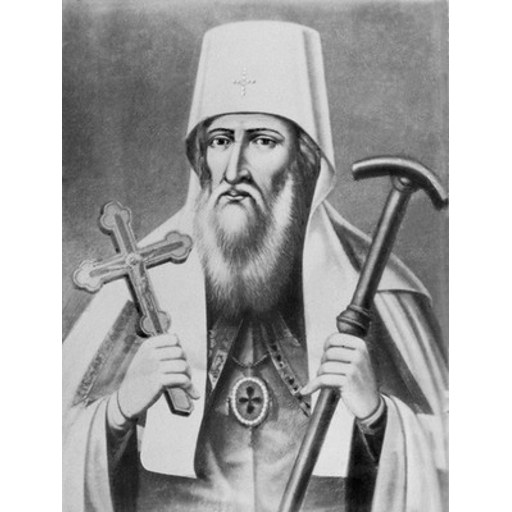
AnonymousUnknown author
License: Public domain
Anthony (Stakhovsky)
Saint- Life Span
- d. 1740
- Gender
- male
- Church
- Catholic
Places
Relics & Where to Venerate
Location unknown
The bodily remains of Anthony (Stakhovsky) are a first-class relic. Venerated at Tobolsk.
Roles & Family
Biography
Anthony (Stakhovsky) was a hierarch of the Russian Orthodox Church in the early eighteenth century, known in the world as Andrei Stakhovsky. He was born in the later seventeenth century in Little Russia, the Orthodox Ukrainian lands of the Left Bank then under the Tsardom of Russia, and came from a clerical family. The exact year and place of his birth are not securely documented; later reference works sometimes give an approximate date around 1680, but this remains unverified. He was educated at the Kiev-Mohyla Academy, the principal Orthodox school of higher learning in the East Slavic world, which in that period trained a large share of the men who later filled Russian episcopal sees.
After taking monastic vows under the name Anthony he was assigned to the Chernigov Collegium, where he taught and later served as prefect and as a leading figure in the school’s administration. The Chernigov see and its collegium belonged to the learned monastic culture of Kiev and Chernigov that supplied so many Petrine-era bishops. In 1713 he was consecrated Bishop of Chernigov, filling the vacancy created when John (Maximovich) was transferred to Siberia. He governed the Chernigov diocese for about eight years, during the years when Peter I was reorganizing the Russian Church and replacing the patriarchate with the Holy Governing Synod.
In 1721 Anthony was appointed Metropolitan of Tobolsk and Siberia, one of the most extensive missionary dioceses of the Russian Church, with its center at Tobolsk. He held that office from 1721 until his death in 1740. In Siberia he continued the missionary and administrative work of predecessors such as Philotheus (Leshchinsky) and John (Maximovich), including pastoral care of Russian settlers, missions among indigenous peoples, and the church’s contest with Old Belief across a territory stretching over western and much of central Siberia. Church historians remember him as one of the Kievan-educated monks who staffed the Siberian episcopate in the decades after the Petrine reforms.
Metropolitan Anthony died in Tobolsk on 27 March 1740 and was buried in the Sophia-Dormition Cathedral of the Tobolsk Kremlin. Unlike his predecessor John of Tobolsk, he was not later glorified as a saint. His career is of interest mainly as an example of the movement of Little Russian monastic scholars into the Great Russian and Siberian hierarchy in the first half of the eighteenth century.