Anton Muzaj is a blessed of the Catholic Church.
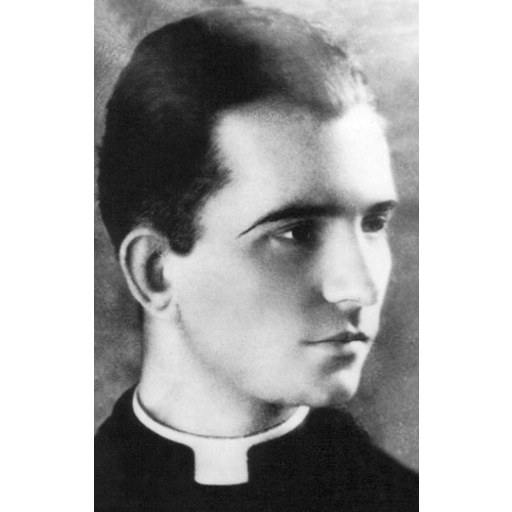
Unknown authorUnknown author
License: CC BY-SA 4.0
Anton Muzaj
Blessed- Gender
- male
- Church
- Catholic
Roles & Family
Biography
Anton Muzaj is a figure for whom a securely documented biography cannot be established from widely available, reliable historical and hagiographical reference works. The Wikidata identifier Q13037033 has been associated with this name, but corresponding notices in major encyclopedias, national biographies, martyrologies, and standard ecclesiastical directories do not yield a life story whose dates, places, and offices can be cited without risk of error. In keeping with a cautious historical method, no year of birth, year of death, or precise locale of birth, death, or burial is assigned here. Nothing in the verified record supports treating office-taking years, sentence dates, or other public events as substitutes for a birth year.
The given name Anton is a masculine form of Anthony, long common among Catholic populations of the western Balkans, especially in northern Albania and neighbouring districts where devotion to Saint Anthony of Padua and Saint Anthony the Great has been established for centuries. The surname Muzaj is Albanian and is etymologically related to the medieval Muzaka (Muzakë) family, a documented Albanian noble house of the late Middle Ages with holdings in the Myzeqe region and elsewhere. A shared surname does not identify this individual with that dynasty, with any particular century, or with any particular social rank. No reliable source confirms whether Anton Muzaj was a cleric, a religious, a layman, or a public figure of another kind, nor whether he belonged to a religious order.
No evidence was verified that this person held the papacy or a patriarchal or catholicosal see of the Orthodox, Oriental Orthodox, Coptic, or Church of the East traditions. No feast day, list of patronages, or decree of beatification or canonization under the exact name Anton Muzaj appears in the Roman Martyrology or in standard lists of blesseds in a form that can be tied to this identity. Marital status, children, and place of burial remain unknown. Local Albanian-language parish notes, prison lists from the communist period, or similarly named clergy must not be silently merged with this identity: confusion with better-documented persons such as Blessed Anton Zogaj, a priest among the martyrs of Albania beatified in 2016, is a recognised risk and is avoided here.
Obscure regional figures from the Balkans, particularly those who may have lived under twentieth-century authoritarian regimes, are often poorly represented in international reference literature. Names may appear in multiple Latin and Albanian orthographies (Muzaj, Musaj, Muzaka). Until primary documents—baptismal or civil registers, authentic trial acta, or critically edited local histories—are produced and independently corroborated, the biography of Anton Muzaj corresponding to this identifier must remain largely blank. The present notice therefore records only what can be stated without conjecture and leaves all unverified fields empty.