Antonia Mesina is a blessed of the Catholic Church (1919 - 1935). Antonia Mesina's feast day is celebrated on 17 May. Antonia Mesina is the patron saint of rape victims.
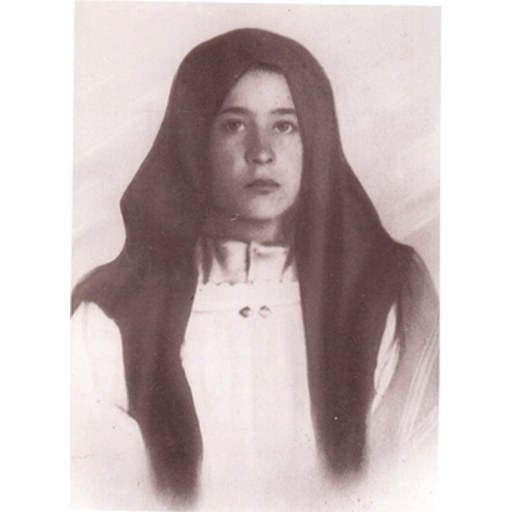
Unknown photographer
License: Public domain
Antonia Mesina
Blessed- Life Span
- 1919 - 1935 (age 16)
- Feast Day
- 17 May
- Gender
- female
- Church
- Catholic
Places
Roles & Family
Patronage
rape victims
Canonization
Biography
Antonia Mesina was born on 21 June 1919 in Orgosolo, a pastoral town in the Barbagia highlands of Sardinia, then in the Kingdom of Italy. She was the second of ten children of Agostino Mesina, a corporal in the municipal guard, and Grazia Rubanu. The family was poor, and the children were raised in the traditional Catholic milieu of rural Sardinia in the early twentieth century. Antonia received only a brief elementary education and left school after the first few grades so that she could remain at home. Her mother was often in poor health, and Antonia took on cooking, cleaning, and the care of her younger brothers and sisters. Witnesses later described her as obedient, industrious, and devout. She attended Mass as often as circumstances allowed, received the sacraments, and in 1930 enrolled in Catholic Action, becoming an active member of its girls’ section, the principal lay apostolate movement in Italy at that time.
On the afternoon of 17 May 1935, when she was fifteen, Antonia went with a companion to gather firewood on a hillside outside Orgosolo, a common chore in a community that still relied on wood for fuel. While they were collecting sticks, a young local man, Ignazio Cannu, approached and attempted to rape her. Her companion fled to seek help. Antonia refused to submit and resisted the assault. Cannu then struck her repeatedly about the head and body with a stone. She died of the injuries inflicted in the attack. The crime was quickly discovered; Cannu was identified, arrested, tried, and convicted. Contemporary reports and the later acts of her cause stressed that she had died rather than surrender her chastity, and she came to be classed among modern martyrs of purity.
The killing made a deep impression in Orgosolo and the surrounding district. A large crowd attended her funeral, and a popular reputation for holiness formed around her memory, encouraged by Catholic Action, which presented her as a model of youthful fidelity. A diocesan process was opened, and the cause advanced in Rome. Church authorities recognized her death as martyrdom in defense of the virtue of chastity. On 4 October 1987 Pope John Paul II beatified her in Saint Peter’s Square in Rome. She has not been canonized and is therefore invoked as Blessed Antonia Mesina.
Her feast is kept on 17 May, the anniversary of her death. Veneration is strongest in Sardinia, especially in Orgosolo, where her remains are preserved in the parish church, and among members of Catholic Action. She is invoked as a patron of victims of rape and sexual violence. In Catholic writing she is often associated with Saint Maria Goretti and with other twentieth-century women killed while resisting sexual assault, and she is held up as an example of courage, purity, and lay Christian commitment in adolescence.