Antonina is a saint of the Catholic Church. Antonina's feast day is celebrated on 12 June.
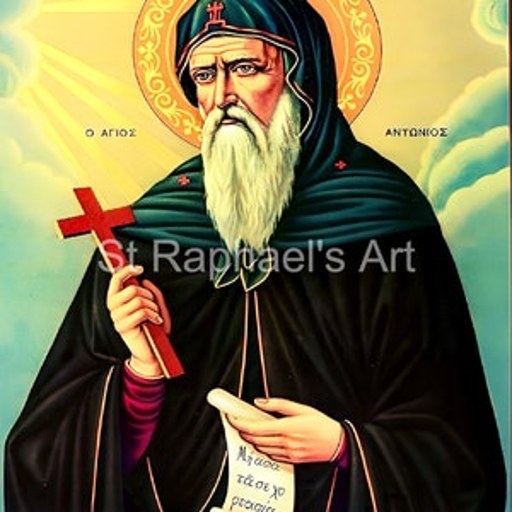
https://www.etsy.com/uk/market/saint_anthony_icon
License: unknown
Antonina
Saint- Feast Day
- 12 June
- Gender
- female
- Church
- Catholic
Places
Roles & Family
Biography
The name Antonina is borne by several early Christian martyrs whose notices in Greek synaxaria and Latin martyrologies are short, late, and not always easy to disentangle. The figure most consistently localized is a woman of Nicaea in Bithynia, in northwestern Asia Minor, commemorated as a martyr of the imperial persecutions in the later third or early fourth century. Byzantine liturgical texts describe her as a Christian of that city who was denounced, examined by a governor, tortured, and executed. Western martyrologies, following the same Eastern tradition, enter an Antonina of Nicaea, customarily on 12 June. No contemporary passion, inscription, or administrative record survives. Later calendars sometimes place her death in 286 and sometimes around 304, years that belong to the conventional dating of the persecutions under Diocletian and his colleagues rather than to independently attested chronology. A year of birth is nowhere recorded.
In the received hagiographical outline, Antonina refused to offer sacrifice to the pagan gods and was therefore subjected to a sequence of punishments familiar from other Asia Minor martyrdoms: beating, prolonged imprisonment, and a capital sentence. One recension states that she was drowned in a lake, weighted with a stone; another that she was burned. Such discrepancies are characteristic of synaxarion entries compiled centuries after the events they purport to describe, when oral cult and local memory had already been reshaped by literary convention. Nothing reliable is known of her social rank, occupation, or household. The sources do not establish whether she lived as a consecrated virgin or as an ordinary laywoman, nor do they name parents, a spouse, or children. The statement that she was born at Nicaea itself is repeated in Orthodox synaxaria but cannot be confirmed from any source independent of the cult.
A second Antonina appears in the legend of the soldier Alexander, kept in East and West in early May. In that story a virgin named Antonina is condemned to sexual slavery in a brothel; Alexander, a Christian soldier, changes clothes with her so that she may escape; both are recaptured and beheaded. The setting is given variously as Constantinople, Alexandria, or another eastern city, and the emperor as Maximian. Whether this woman is identical with the martyr of Nicaea, a narrative doublet, or a separate person is not determinable from the evidence. The Roman Martyrology further records an Antonina at Cea (the Aegean island of Keos) on 1 March, again without a recoverable biography. Critical hagiography therefore treats Saint Antonina as a name attached to more than one poorly documented martyr cult of the Greek East, not as a single life that can be reconstructed in detail.
Antonina of Nicaea continues to be commemorated in the Eastern Orthodox Church on 12 June. She is honored as a martyr; no ancient, stable list of patronages of places, trades, or illnesses is attached to her in the major martyrologies. She was never the object of a formal papal canonization of the later medieval or modern type: her cult is of the pre-congregational kind, arising from local veneration of an early martyr and subsequently registered in the great liturgical books of East and West. No tomb, authenticated relics, or contemporary epitaph can be identified with certainty. What remains, after the legendary accretions are set aside, is the memory of a Christian woman of Bithynia who was believed to have died for her faith in the age of the last pagan persecutions, and whose name was preserved in the calendar long after the particulars of her life had been lost.