Antoninus is a saint of the Catholic Church (1389 - 1459). Antoninus's feast day is celebrated on 2 May. Antoninus is the patron saint of Florence;Archdiocese of Florence.
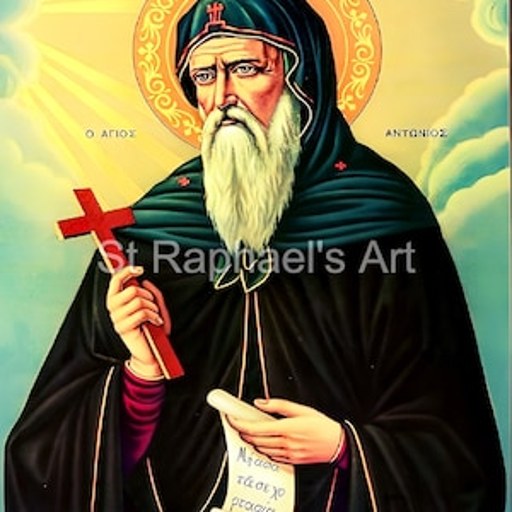
https://www.etsy.com/uk/market/saint_anthony_icon
License: unknown
Antoninus
Saint- Life Span
- 1389 - 1459 (age 70)
- Feast Day
- 2 May
- Gender
- male
- Church
- Catholic
Places
Roles & Family
Religious Information
Patronage
Florence;Archdiocese of Florence
Canonization
Biography
Antoninus of Florence was born Antonio Pierozzi in Florence in 1389, the son of the notary Niccolò Pierozzi. Slight of build and of fragile health, he received the diminutive form of his name by which he is known in the calendar of saints. In adolescence he sought admission to the Dominican Order. The Observant reformer Giovanni Dominici at first doubted whether so frail a candidate could endure conventual life, but accepted him after Antoninus showed his seriousness by memorizing substantial portions of Gratian’s Decretum. He made profession in the Observant congregation of the Order of Preachers and was ordained a priest. His early formation combined the strict discipline of the Observance with the study of canon law and theology that later shaped his writing and his government of the church of Florence.
He served as prior of Observant houses at Cortona, Fiesole, Naples, and Santa Maria sopra Minerva in Rome. In his native city he was a leading figure at the convent of San Marco, which Cosimo de’ Medici rebuilt and which Fra Angelico decorated. San Marco became a center of Dominican Observance and of Florentine religious culture. Antoninus’s reputation for learning, prudence, and personal austerity spread beyond Tuscany. In 1446 Pope Eugene IV named him Archbishop of Florence. He accepted the see only under papal command and continued to live with Dominican simplicity, refusing much of the ceremonial display then associated with a wealthy Italian bishopric.
As archbishop he worked to reform the clergy, to visit the parishes of the diocese, and to relieve the poor. He supported the Compagnia dei Buonomini di San Martino, which assisted respectable citizens who had fallen into poverty and were ashamed to beg. He remained in Florence during plague and dearth rather than withdrawing from the city. He advised civic leaders, including the Medici, without becoming a factional partisan, and he sought to restrain usury and other commercial abuses while recognizing the realities of a mercantile republic. His episcopate is often cited as an example of pastoral seriousness in the decades before the Protestant Reformation and the Council of Trent.
Antoninus wrote extensively. The Summa Moralis, a large handbook of moral theology and casuistry, was widely used in the later fifteenth and sixteenth centuries. He also produced a world history, the Chronicon or Summa Historialis, together with sermons, letters, and shorter treatises on economic and canonical questions, including just price and usury in a commercial society. He died in Florence on 2 May 1459 and was buried in the church of San Marco. Veneration began soon after his death. Pope Adrian VI canonized him in 1523. His feast is kept on 2 May. He is venerated as a patron of Florence and of its archdiocese.