Apostle is a saint of the Catholic Church.
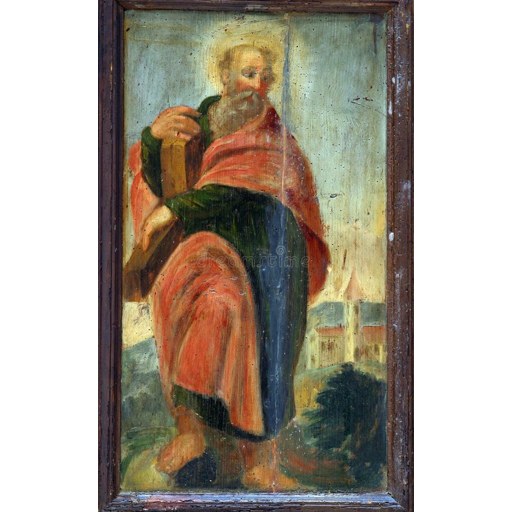
https://dreamstime.com/photos-images/apostle-painting.html
License: unknown
Apostle
Saint- Church
- Catholic
Biography
The designation Apostle is not the proper name of a single historical individual but a title used in early Christianity for those sent to proclaim the message of Jesus of Nazareth. In the New Testament the term most often denotes the Twelve chosen during Jesus’s ministry in Galilee and Judea in the first half of the first century CE, together with a smaller number of later figures such as Paul of Tarsus. Because the subject given here is only the generic title, no unique person can be identified and therefore no verified personal data—birth year, death year, city or country of origin, burial place, spouse, or children—can be attached to one figure.
According to the synoptic Gospels and the Acts of the Apostles, the Twelve were drawn largely from fishing and other working communities around the Sea of Galilee. The lists of names vary slightly but typically include Simon called Peter, his brother Andrew, James and John the sons of Zebedee, Philip, Bartholomew (often identified with Nathanael), Thomas, Matthew the tax collector, James son of Alphaeus, Thaddaeus or Judas son of James, Simon the Cananaean or Zealot, and Judas Iscariot. After Judas’s death Matthias was chosen by lot to restore the number to twelve. These men are presented as witnesses of Jesus’s public activity, death, and, in the resurrection narratives, of subsequent appearances. Precise dates of birth are unknown for all of them; they were adults during the prefecture of Pontius Pilate (commonly dated c. 26–36 CE). Later extra-canonical acts and medieval legends assigned missionary journeys, martyrdoms, and tombs to many of them, but those accounts generally lack contemporary corroboration.
The circle of those called apostles was soon enlarged. Paul, a Jew from Tarsus in Cilicia who had at first opposed the Jesus movement, claimed apostolic authority on the basis of a visionary encounter with the risen Christ and became the most influential missionary to Gentile populations in the eastern Mediterranean. Other New Testament figures such as Barnabas, Silas, Andronicus, and Junia are also termed apostles. Subsequent Christian tradition developed individual feast days, patronage lists, and hagiographical biographies for named apostles, yet these later elaborations cannot be projected onto an unspecified Apostle. None of the original Twelve except Peter is identified in Catholic historiography as Bishop of Rome, and none held the later office of patriarch or catholicos of an autocephalous see. They belonged to no later religious order.
In liturgical practice the apostles were venerated as saints from the earliest centuries of the Church; they were not the objects of a medieval papal canonization process. Collectively they are regarded as foundational witnesses rather than as patrons of particular places, professions, or illnesses under the bare title Apostle. Documented marital status exists only for Peter (who had a mother-in-law) and is otherwise unrecorded. Consequently every personal biographical field for an unnamed Apostle must remain blank, and any attempt to supply a birth year, death year, or single feast day would be conjecture rather than verified history.