Ariadne is a saint of the Catholic Church (d. 515).
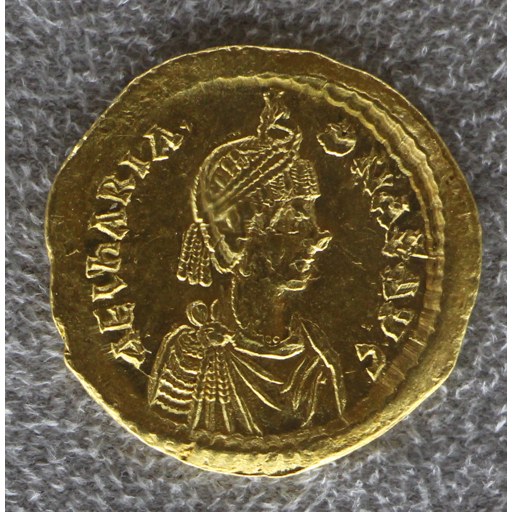
Sailko
License: CC BY 3.0
Ariadne
Saint- Life Span
- d. 515
- Gender
- female
- Church
- Catholic
Places
Relics & Where to Venerate
Location unknown
The bodily remains of Ariadne are a first-class relic. Venerated at Church of the Holy Apostles.
Roles & Family
Religious Information
Biography
Aelia Ariadne was an Eastern Roman empress of the later fifth and early sixth centuries, the daughter of Emperor Leo I and Empress Verina and the wife, in succession, of the emperors Zeno and Anastasius I. She was the eldest of Leo’s daughters; her younger sister was Leontia. Leo, a soldier of Thracian origin, rose from relatively modest military rank to the throne in 457 with the support of the powerful general Aspar. Ariadne’s exact year and place of birth are not recorded in surviving sources. She was already living when her father became emperor, and thus was born during the reign of Marcian, before Leo’s accession.
In the 460s Leo sought to check Aspar’s dominance by allying himself with the Isaurians of the Taurus mountains. Ariadne was married, around the mid-460s, to the Isaurian chieftain Tarasicodissa, who took the Greek name Zeno. Their son Leo (the future Leo II) was born not long afterward. When Leo I died in 474, the child was proclaimed emperor and Zeno was associated as co-emperor. Leo II died later that same year, still a small child, and Zeno became sole ruler. Ariadne thereby became empress consort, her own imperial descent helping to legitimize her husband’s position in the eyes of the Constantinopolitan elite and the army.
Zeno’s reign was repeatedly shaken by revolt. In 475 a conspiracy involving Ariadne’s mother Verina and Verina’s brother Basiliscus drove Zeno from Constantinople to Isauria. Ariadne remained for a time in the capital before joining her husband in exile. Basiliscus’s government collapsed the following year and Zeno was restored. Later challenges included the revolt of Marcian, husband of Ariadne’s sister Leontia, and the long insurrection associated with the general Illus. Through these crises Ariadne remained a figure of dynastic continuity at court. Contemporary and later accounts present her as politically capable, though the surviving narrative sources are often hostile to Zeno and must be used with caution.
Zeno died in 491 without a surviving son. The Isaurian party favored his brother Longinus, but the choice of successor effectively lay with Ariadne. She selected Anastasius, a palace official of senatorial rank, already of mature years and known for personal piety, and married him shortly after Zeno’s death. The marriage secured Anastasius’s accession. Ariadne continued as empress until her own death in 515. She had no children by Anastasius; her only securely attested child was Leo II. She was buried in the Church of the Holy Apostles in Constantinople, the customary mausoleum of the imperial family. Her role in two successive transfers of power made her one of the most consequential imperial women of the early Byzantine period.