Armida Barelli is a blessed of the Catholic Church (1882 - 1952).
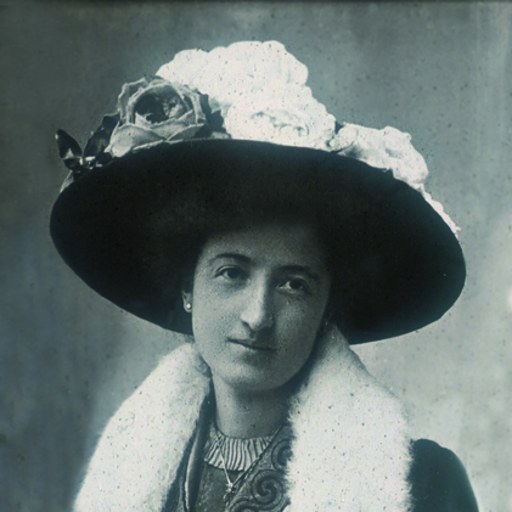
Unknown photographer
License: Public domain
Armida Barelli
Blessed- Life Span
- 1882 - 1952 (age 70)
- Gender
- female
- Church
- Catholic
Places
Roles & Family
Religious Information
Canonization
Biography
Armida Barelli was born on 1 December 1882 in Milan, in the Kingdom of Italy, into a well-to-do family of the Lombard bourgeoisie. Her upbringing combined material comfort with the conventional Catholic practice of her class. She received a solid education, including a period of study in Switzerland, and as a young woman she moved in cultured social circles. A decisive spiritual deepening in early adulthood led her away from a purely worldly path. She did not marry, and she came to understand her vocation as a laywoman wholly given to God while remaining in the world. She entered the Third Order of Saint Francis, drawing on Franciscan spirituality of poverty of spirit and apostolic charity, and she formed a lasting collaboration with the Franciscan friar Agostino Gemelli, whose intellectual and organizational gifts complemented her own talent for forming people and building institutions.
In the climate of Catholic revival that followed the First World War, Barelli became one of the principal architects of the organized lay apostolate among Italian women. With the support of the Holy See under Pope Benedict XV, she founded and for decades directed the Gioventù Femminile di Azione Cattolica, the young women's branch of Italian Catholic Action. The movement grew into a nationwide network that trained girls and young women in Christian doctrine, prayer, and social responsibility, and that sought to prepare them to influence family life, education, and public affairs. Barelli traveled extensively, wrote, and spoke in order to spread this ideal. She held that baptism conferred a real mission on every Christian, and that women in particular had a distinctive contribution to make in a society undergoing rapid change. Her work unfolded under Popes Pius XI and Pius XII, during years marked by the rise of Fascism, the Lateran settlement, the Second World War, and the reconstruction of Italy, all of which required careful navigation of the relationship between Catholic organizations and the Italian state.
Together with Gemelli, Barelli was among the founders of the Università Cattolica del Sacro Cuore, which opened in Milan in 1921 and became the leading Catholic university in Italy. The university embodied their conviction that the faith should engage modern culture at the highest intellectual level. In the same period they established the Istituto Secolare delle Missionarie della Regalità di Cristo, a secular institute whose members would live evangelical consecration without leaving their professional and social settings. Barelli herself belonged to this form of life: she remained a laywoman, took private vows, and devoted her energies to the kingship of Christ understood as the permeation of society by the Gospel. She continued as a national leader of Catholic young women until the years after the Second World War, when she gradually withdrew from public office because of failing health.
Barelli spent her last years in Marzio, in the province of Varese in Lombardy, where she endured a long illness. She died there on 15 August 1952. Her reputation for holiness and her role in the history of the Italian laity led to the opening of a cause of beatification. Pope Francis recognized that she had lived the Christian virtues to a heroic degree, and she was beatified on 30 April 2022 in a ceremony held in Milan. She is remembered as a pioneer of female Catholic Action, a co-founder of the Catholic University of the Sacred Heart, and an early witness to consecrated life in the world. Her life belongs to the broader twentieth-century development of the lay vocation in the Catholic Church, a development later confirmed by the Second Vatican Council.