Ashot I of Iberia is a saint of the Catholic Church. Ashot I of Iberia's feast day is celebrated on 29 January.
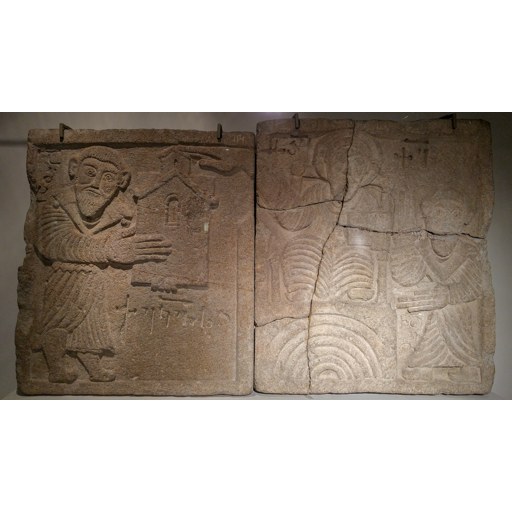
Mostafameraji
License: CC BY-SA 4.0
Ashot I of Iberia
Saint- Feast Day
- 29 January
- Gender
- male
- Church
- Catholic
Relics & Where to Venerate
Location unknown
The bodily remains of Ashot I of Iberia are a first-class relic. Venerated at Kingdom of the Iberians.
Roles & Family
Canonization
Biography
Ashot I of Iberia, known in Georgian tradition as Ashot the Great and as Ashot Kouropalates, was a prince of the Bagrationi family who became the first member of that dynasty to hold the office of presiding prince (erismtavari) of Iberia, the medieval Georgian realm of Kartli. He attained that position in the early ninth century, conventionally around 813, at a time when Abbasid control in the central Caucasus had loosened and the older Chosroid line of Iberian princes had lost effective power. The Byzantine imperial court recognized him with the dignity of kouropalates, a title that Georgian historical writing thereafter attached to his name. His family’s strength lay in the southwestern Georgian districts of Tao and Klarjeti, a highland borderland between the Georgian, Armenian, and Byzantine worlds, where Bagratid lords had established themselves in the eighth century after moving from the Armenian sphere. His exact year of birth is not recorded in the surviving sources.
Ashot made the fortress-town of Artanuji in Klarjeti the principal seat of his rule. Georgian chronicles present him as a restorer of a country that earlier Arab campaigns had depopulated and ruined: he encouraged resettlement, rebuilt strongholds, and fostered trade, so that Artanuji later figured in Byzantine administrative literature as a prosperous commercial center. He had to balance recognition from Constantinople with the continuing presence of Abbasid authority and of the Muslim emirs of Tbilisi, as well as with rival Caucasian dynasts. At the height of his power he exercised influence over much of Kartli, but resistance from the Tbilisi emirate and from local nobles eventually confined him more narrowly to his hereditary lands in Klarjeti and neighboring districts, even while he retained the kouropalates title. He remained a lay prince, not a monk or bishop, and the name of his wife is not preserved, though the chronicles treat his sons as legitimate dynastic heirs.
He was an important patron of the Georgian Church and of the monastic revival that turned Tao-Klarjeti into a major spiritual and literary heartland of the Georgian world in the ninth century. The work of the monk Gregory of Khandzta and the rebuilding of Klarjetian monasteries took place under Bagratid protection in Ashot’s generation. That ecclesiastical restoration helped to root Bagratid legitimacy in Orthodox Christian recovery after a period of warfare and abandonment. Primary evidence for his career is limited: it rests chiefly on the Georgian chronicle cycle preserved in Kartlis Tskhovreba, the later Bagratid dynastic history associated with Sumbat Davitis-dze, and scattered Byzantine notices, so many personal details remain unknown.
Ashot was killed in the Nigali valley, in the Chorokhi river basin of historical Klarjeti, in the late 820s. Georgian tradition and modern scholarship date the murder variously to 826 or 830; the sources agree that he died at a church, while at prayer, at the hands of opponents linked to Arab power or to hostile nobles. Death at the altar became the basis for his veneration as a martyr. The Georgian Orthodox Church numbers him among its saints and commemorates him on 29 January. His sons divided his inheritance: Bagrat continued as presiding prince of Iberia; Adarnase held Tao; Guaram, known as the mampali, received other estates. From that generation descended the later Bagratid rulers who, in the following century, assumed a royal title and eventually unified the Georgian kingdoms.