Asterius is a saint of the Catholic Church. Asterius's feast day is celebrated on 30 October.
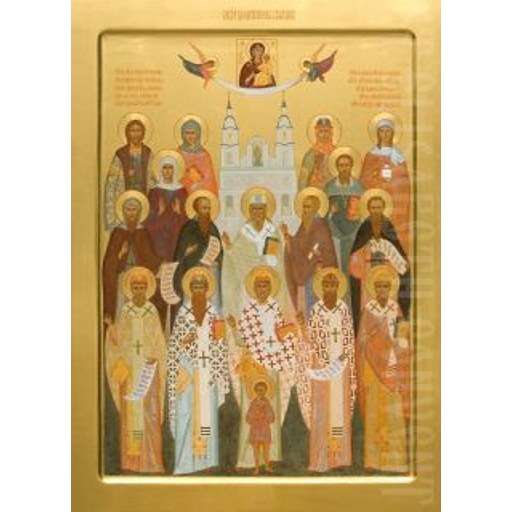
https://catalog.obitel-minsk.com/icons-prav/painted-icons.html
License: unknown
Asterius
Saint- Feast Day
- 30 October
- Gender
- male
- Church
- Catholic
Roles & Family
Biography
Saint Asterius of Amasea was bishop of Amasea in Pontus, in northern Asia Minor, in the later fourth and early fifth centuries. Amasea, on the river Iris (modern Amasya in Turkey), was a principal city of the Roman province of Helenopontus. No contemporary source preserves the year of his birth, the date of his episcopal consecration, or the year of his death; he is known from the internal evidence of his sermons to have been active around the year 400. The Roman Martyrology commemorates him on 30 October as bishop of Amasea whose homilies are still extant. He was not Bishop of Rome and did not hold a patriarchal or catholicosal see.
Before entering the clergy Asterius had been trained in rhetoric and had practiced as an advocate, a fact he himself alludes to in his preaching and which is consistent with the forensic and descriptive character of his Greek style. Nothing reliable is recorded of his family origin, of any marriage, or of profession in a monastic order. The circumstances of his passage from the bar to the clergy and then to the see of Amasea are not described in surviving narrative sources. As bishop he addressed an urban Christian congregation in a region long evangelized but still marked by pagan seasonal customs, sharp economic inequality, and the ordinary vices of a late Roman provincial capital.
His reputation rests on a body of Greek homilies, about sixteen of which have generally been treated as authentic. They include discourses on the martyrdom of Saint Euphemia of Chalcedon, on Saint Phocas of Sinope, on the holy martyrs, against avarice, on the festival of the Kalends, and on scriptural themes such as the rich man and Lazarus. The homily on Euphemia contains a detailed description of a painting of the saint’s passion in her church, an early and frequently cited example of Christian ekphrasis and a witness to the public cult of the martyrs. The sermon on the Kalends criticizes New Year revelry and gift-exchange as incompatible with Christian discipline. Taken together, the homilies are important sources for the social and religious life of Greek-speaking Asia Minor in the Theodosian age, and for the history of Christian art and of popular festivals.
Later Byzantine readers valued his eloquence. Photius, in the Bibliotheca, praised the quality of Asterius’s sermons. The homilies circulated in Greek manuscripts and were taken into the patristic collections of the early modern period. Asterius does not appear as a leading participant in the great doctrinal councils of his lifetime, and no detailed account of his last years survives. He is generally presumed to have died at Amasea in the early fifth century, but neither the exact year nor an independently attested burial place is recorded in early sources.
Veneration of Asterius belongs to the ancient episcopal cult of a local bishop-preacher rather than to a later process of papal canonization or beatification. No medieval or modern list of specialized patronages is securely attached to his name. What remains of him is the voice of a late antique Greek bishop: a former lawyer, a critic of greed and of surviving pagan custom, and a promoter of the memory of the martyrs in the churches of Pontus and the wider Greek East.