Athanasios III of Constantinople is a saint of the Catholic Church (1597 - 1654). Athanasios III of Constantinople's feast day is celebrated on May 2.
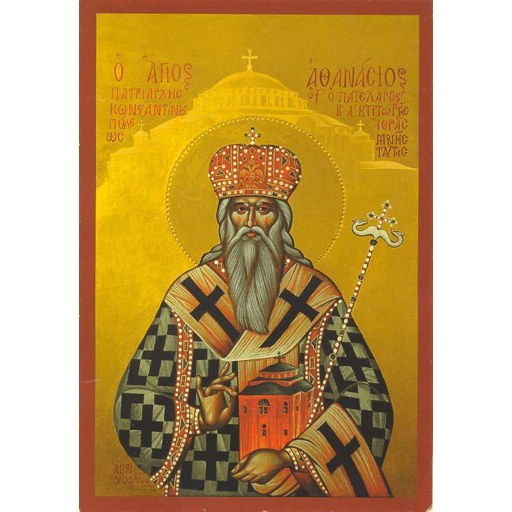
Unknown authorUnknown author
License: Public domain
Athanasios III of Constantinople
Saint- Life Span
- 1597 - 1654 (age 57)
- Feast Day
- May 2
- Gender
- male
- Church
- Catholic
Places
Canonization
Biography
Athanasius III of Constantinople, known by the family name Patelaros (also spelled Patellarios), was a seventeenth-century Greek Orthodox hierarch who twice held the Ecumenical Patriarchate for very short periods and who later died in the Ukrainian lands, where he came to be venerated as a saint. He was born in 1597 in Rethymno on Crete, then a possession of the Venetian Republic and a notable center of Greek learning and Orthodox monastic life under Latin political rule. Formed as a monk, he rose in the church under Ottoman rule and was appointed Metropolitan of Thessaloniki, one of the principal sees of the Greek East, before being drawn into the volatile politics of Constantinople.
In the early seventeenth century the Ecumenical Patriarchate was subject to the Ottoman practice whereby appointment required heavy payments to the Porte and could be reversed when rivals outbid the incumbent or court factions shifted. Athanasius was installed as patriarch in 1634, but his first tenure lasted only a matter of weeks before he was deposed. He was restored for a second, equally brief patriarchate in 1652. Such ephemeral reigns were characteristic of the century rather than unique to him. The doctrinal and political struggles of the age, including the controversies surrounding Patriarch Cyril Lucaris and Western confessional pressures on the Orthodox Church, formed the wider background to these rapid changes of office, though the precise factional alignments of Athanasius’s own short reigns are not always easy to reconstruct from surviving sources.
After his final removal from Constantinople, Athanasius left the Ottoman capital and traveled north through the Orthodox principalities of Wallachia and Moldavia, a well-established route for displaced Greek hierarchs seeking patronage. He then entered the sphere of the Cossack Hetmanate and Muscovy. In the early 1650s, during the reign of Tsar Alexei Mikhailovich and in the years of the Khmelnytsky uprising and the Pereyaslav agreement, he was received in the Russian and Ukrainian lands. He took up residence at the Monastery of the Transfiguration, known as the Mhar (or Mgar) Monastery, near Lubny. There he died in 1654, on 5 April according to the date traditionally given, and was buried at the monastery.
His tomb at Mhar became a center of local religious memory. Later tradition in the Russian and Ukrainian Orthodox churches holds that his relics were found incorrupt, and he has been honored as a saint, sometimes under the name Athanasius of Lubny or Athanasius of Constantinople. The cult belongs especially to that regional Orthodox landscape. Historically, his career illustrates the insecurity of the Constantinopolitan patriarchate under Ottoman domination, the mobility of Greek clergy across the Orthodox world of the mid-seventeenth century, and the way hierarchs from the Ottoman Greek East could find a last home, and a posthumous cult, in the monasteries of Ukraine and Russia.