Athanasius the Meteorite is a venerable of the Catholic Church (1302 - 1380). Athanasius the Meteorite's feast day is celebrated on 20 April.
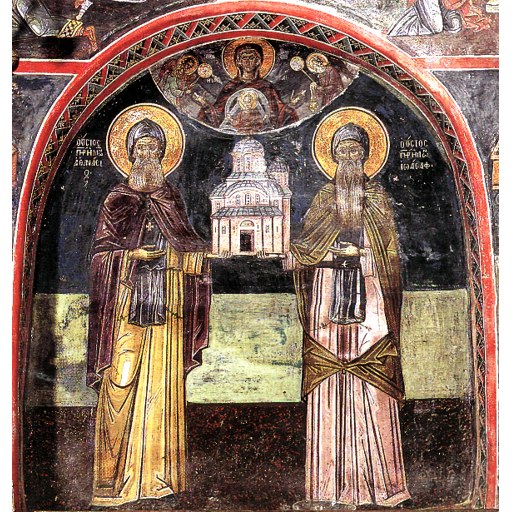
User:Erud
License: Public domain
Athanasius the Meteorite
Venerable- Life Span
- 1302 - 1380 (age 78)
- Feast Day
- 20 April
- Gender
- male
- Church
- Catholic
Places
Roles & Family
Biography
Athanasius the Meteorite (Greek: Athanasios ho Meteorites), also called Saint Athanasius of Meteora, was a fourteenth-century Eastern Orthodox monk and the chief organizer of coenobitic monasticism on the sandstone pillars of Meteora in Thessaly. Traditional hagiography places his birth in 1302 at Neopatras (medieval Neai Patrai, modern Ypati in Phthiotis). Orphaned in childhood, he was raised by an uncle and given a literary education, including a period in Thessaloniki, then a major Byzantine intellectual and spiritual centre. Seeking a stricter ascetic life, he went to Mount Athos, where he was tonsured and received the monastic name Athanasius.
On Athos he lived under an elder named Gregory and practised the hesychastic life. In the 1330s–1340s Turkish pirate raids repeatedly disrupted the Holy Mountain and drove many monks to look for safer refuges. Athanasius and Gregory left Athos, stayed for a time in the region of Veria (Beroea), and eventually reached the isolated rock pillars of Meteora in northwestern Thessaly. Hermits already occupied caves and ledges there, but the site had no stable coenobium. Athanasius first lived as a hermit and then, around the middle of the fourteenth century, ascended the highest and most spacious summit, Platys Lithos (the Broad Rock).
On that rock he founded the Monastery of the Transfiguration of Christ, later known as the Great Meteoron, which became the leading house of the Meteora complex. He gathered disciples, built a church and cells, and introduced a typikon modelled on Athonite usage, turning a loosely associated group of hermits into an organized coenobitic community. The house was further developed by his disciple Saint Joasaph (in the world John Uroš), a member of the Serbian Nemanjić dynasty who had ruled in Thessaly before taking monastic vows. Under Athanasius and Joasaph the Great Meteoron acquired land, manuscripts, and a reputation as a centre of Orthodox monasticism during a period of political fragmentation and Ottoman advance in the Balkans.
Athanasius died at Meteora in 1380 and was buried at the monastery he had founded. The Eastern Orthodox Church commemorates him as a saint, with his principal feast on 20 April. His memory remains bound to the Great Meteoron, which continues as a functioning monastery and forms part of the UNESCO-listed Meteora monastic landscape. The principal source for his career is a hagiographical Life composed in the Meteora milieu; it supplies the traditional outline of his life but few dates that can be corroborated independently of that tradition.