Augustin Pak Chong-wŏn is a saint of the Catholic Church.
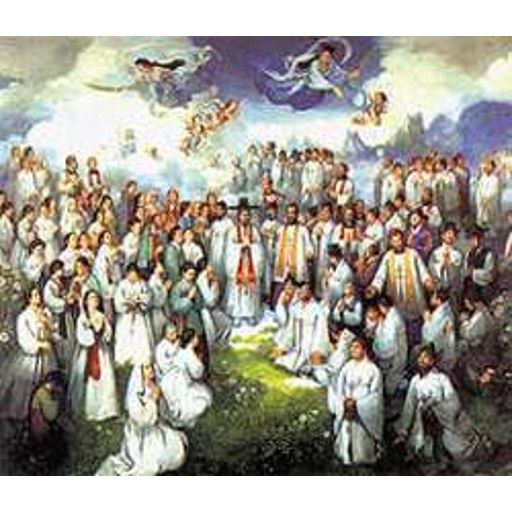
https://www.catholic.org/saints/saint.php?saint_id=7072
License: unknown
Augustin Pak Chong-wŏn
Saint- Gender
- male
- Church
- Catholic
Places
Roles & Family
Biography
The figure recorded as Augustin Pak Chong-wŏn belongs to the onomastic world of Korean Catholicism, in which a Korean family name and given name were joined to a baptismal name taken from the Western calendar of saints. Augustin (Augustine) was a male Christian name used among Korean Catholics from the late eighteenth century onward. Beyond that onomastic pattern, a fully documented individual biography—birth year, native village, social status, occupation, the circumstances of conversion, and a securely dated death—cannot be verified from the standard historical and hagiographical sources available here. The romanization Pak Chong-wŏn (McCune–Reischauer) corresponds to a Korean personal name, but it does not by itself match, without ambiguity, a single well-known entry in the most widely cited lists of the canonized 103 Martyr Saints of Korea or of the larger group of Korean martyrs later raised to the honors of the altar.
Korean Catholicism took root in the late Joseon period under unusual conditions. The faith was introduced largely by Korean lay scholars who encountered Catholic books in Chinese, formed a community before any foreign priest had entered the country, and only later received clergy, chiefly from the Paris Foreign Missions Society. That community suffered repeated state persecutions, especially in 1801, 1839–1840, and 1866, in which catechists, lay leaders, women of every station, and a small number of Korean and foreign priests were arrested, interrogated, and put to death under laws that treated the religion as illicit. Martyrologies, missionary letters, and later positios for beatification preserved hundreds of names, often with baptismal names such as Augustine, Peter, Paul, or Magdalene attached to Korean surnames such as Kim, Yi, Chŏng, Ch’oe, and Pak. Several Pak family members are securely named among the canonized and beatified, but a distinct, source-based identification of this precise form Augustin Pak Chong-wŏn with one of those dossiers is not established here.
In that setting, men called Augustine were typically lay believers or catechists rather than members of a religious order. Some were heads of households whose relatives were baptized with them; others appear in the records as unmarried or as having sent their families into hiding. Without a matching Korean hangul name, a native place, or a persecution year tied to this romanization in an official catalogue of the Holy See or of the Catholic Bishops’ Conference of Korea, it would be improper to assign this subject a birth date, a martyrdom date, a wife or children, a religious congregation, or a particular shrine of burial. Burial of executed Catholics in the Joseon period was often hasty or collective, at sites later remembered as Jeoldusan, Saenamteo, or local common graves; none can be attached to this name on present evidence.
Liturgical commemoration of Korean martyrs is well established in general—the canonized companions of Andrew Kim Taegŏn and Paul Chŏng Hasang are kept on 20 September, and other Korean blesseds have been honored after later beatifications—but a personal feast, a list of patronages, and the names of the pontiffs who may have beatified or canonized this exact person cannot be stated without conflating him with better-documented namesakes. No Bishop of Rome and no Orthodox or Oriental patriarch bore this name. The responsible course is therefore to record gender and the certainty that he was neither pope nor patriarch, to leave biographical particulars blank rather than borrowed from another Pak or another Augustine, and to note that a definitive life would depend on matching this romanized form to a primary Korean or missionary source.