Áurea of San Millán is a saint of the Catholic Church (1043 - 1070). Áurea of San Millán's feast day is celebrated on 11 March. Áurea of San Millán is the patron saint of Villavelayo.
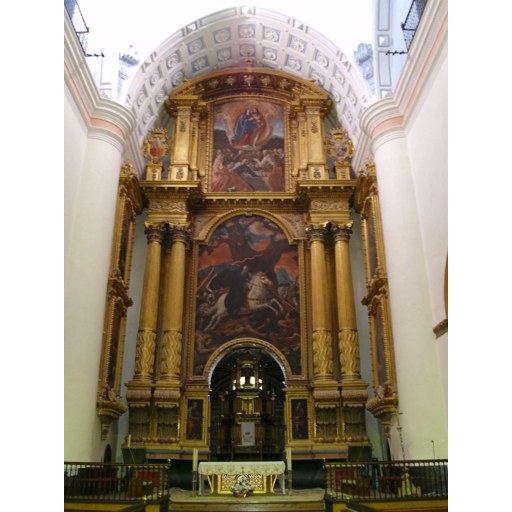
Cenobio
License: CC BY-SA 4.0
Áurea of San Millán
Saint- Life Span
- 1043 - 1070 (age 27)
- Feast Day
- 11 March
- Gender
- female
- Church
- Catholic
Places
Roles & Family
Religious Information
Patronage
Villavelayo
Biography
Áurea of San Millán, also known as Saint Oria (Spanish: Santa Oria or Santa Áurea), was an eleventh-century Spanish Benedictine nun and recluse. Almost all that is known of her derives from the thirteenth-century Castilian poem Vida de Santa Oria by Gonzalo de Berceo, which in turn drew on a now-lost Latin life written by the monk Munio, her confessor at San Millán. Traditional chronology, based on Berceo’s statement that she died at the age of twenty-seven, places her birth in 1043 in the village of Villavelayo in the Rioja region of northern Iberia, then lying on the frontiers of Navarre and Castile. Her parents were named García Aznárez and Amuña (Amunia). After she had entered religious life, her widowed mother likewise became a recluse in the same monastic setting.
As a child of about nine years she was taken to the monastery of San Millán de Suso at San Millán de la Cogolla, where she was formed in the religious life by a nun named Úrraca. She received the Benedictine habit and later adopted the vocation of an enclosed recluse, living in a cell attached to the monastic church. San Millán de Suso, associated with the earlier hermit Saint Emilian (San Millán), was a major spiritual centre in medieval Rioja. Áurea’s way of life combined the Benedictine observance with the severe fasting, vigils, and solitude characteristic of female reclusion in eleventh-century Iberia.
Hagiographical tradition ascribes to her a number of visions. Berceo describes appearances of the virgin martyrs Agatha, Eulalia, and Cecilia, who showed her a throne prepared for her in heaven, as well as visions of the Virgin Mary and of a great tree whose branches signified members of the monastic community. She is said to have predicted the hour of her death and to have been attended in her last illness by Munio. These episodes, recorded two centuries later, belong to the conventions of medieval visionary hagiography and cannot be independently verified, but they shaped her subsequent cult.
Áurea died on 11 March 1070 and was buried at San Millán de Suso. Local veneration developed around her tomb, and she became especially honoured in Villavelayo, of which she is regarded as patron. In the mid-thirteenth century Gonzalo de Berceo, a cleric of San Millán and the first named poet in the Castilian language, composed her verse life, which remains the principal source for her biography. Her feast day is 11 March. She was venerated as a saint by popular and monastic cult in the period before the later centralized papal canonization process; no individual pope is recorded as having formally canonized her.