Aurelianus of Arles is a saint of the Catholic Church (d. 551). Aurelianus of Arles's feast day is celebrated on 16 June.
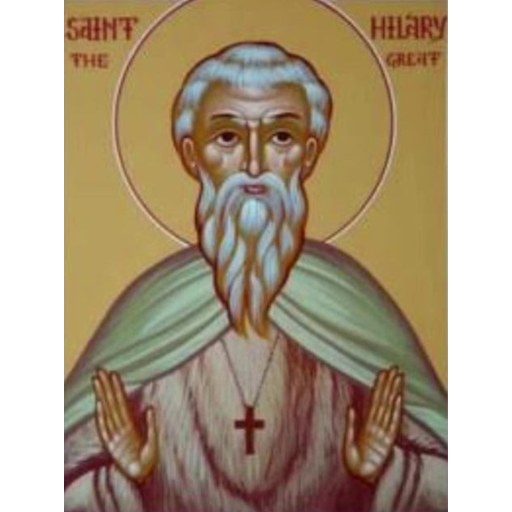
https://handmadeiconsgreece.myshopify.com/en-us/products/saint-hilary-the-bishop-of-arles
License: unknown
Aurelianus of Arles
Saint- Life Span
- d. 551
- Feast Day
- 16 June
- Gender
- male
- Church
- Catholic
Places
Roles & Family
Biography
Aurelianus of Arles, also known as Aurelian, was a sixth-century Gallo-Roman bishop who served as metropolitan archbishop of Arles in southern Gaul during the reign of the Merovingian king Childebert I. He occupied the see from about 546 until his death in 551, succeeding Bishop Auxanius. Arles at this period remained one of the principal ecclesiastical centres of Gaul, and its bishop exercised metropolitan authority over a wide region of Provence and neighbouring territories. Little is recorded of Aurelianus’s family or early life. Later tradition sometimes presents him as a member of the Gallo-Roman aristocracy, but no contemporary source supplies a birthplace or a year of birth, and those details cannot be verified.
His elevation to the episcopate took place under Frankish royal influence. Childebert I, king of Paris, had already intervened in the previous appointment at Arles, and Aurelianus likewise owed his position in part to royal favour. Once in office he worked closely with the king in the foundation of religious houses. With Childebert’s support he established a monastery for men, commonly associated with the dedication of Saint Peter or the Holy Apostles, outside the walls of Arles, and a convent for women dedicated to the Blessed Virgin Mary within the city. For each community he composed a written rule. These rules, the Regula ad monachos and the Regula ad virgines, draw extensively on the earlier monastic legislation of Saint Caesarius of Arles, who had died only a few years before, and they illustrate the continuity of the Caesarian monastic tradition in Provence rather than dependence on the Rule of Benedict, which had not yet become dominant in Gaul.
Aurelianus maintained close relations with the Roman see. Pope Vigilius addressed him as metropolitan of the Gauls and is reported to have granted or confirmed the pallium, the liturgical vestment that marked metropolitan dignity. During the Three-Chapter Controversy, which divided East and West in the middle of the sixth century, Vigilius corresponded with Aurelianus concerning the theological and disciplinary questions raised by the Emperor Justinian’s edicts against certain writings associated with the Council of Chalcedon. The bishop of Arles thus stood at the intersection of Frankish royal power, the older Gallo-Roman church, and the papacy at a moment of acute tension in the Mediterranean church. The surviving papal correspondence is one of the few strictly contemporary windows onto his episcopate.
Aurelianus died in 551, after an episcopate of only about five years, and was succeeded by Sapaudus. He was honoured as a saint in the generations after his death. The Roman Martyrology commemorates him on 16 June, associating the feast with Arles. His monastic rules survive as important witnesses to sixth-century Provençal monasticism, even though the houses he founded did not achieve the later fame of some other Merovingian monasteries. Beyond the episcopal lists, the papal letters, and the rules themselves, the biographical record remains thin. The place of his burial is not securely attested in surviving sources, and many personal details that later hagiography might be expected to supply are simply unknown.