Awtel is a saint of the Catholic Church. Awtel is the patron saint of Kfarsghab.
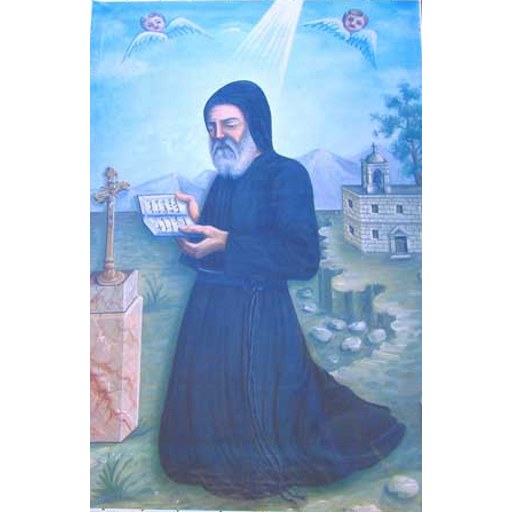
Yellaban 15:43, 30 March 2007 (UTC)
License: Public domain
Awtel
Saint- Gender
- male
- Church
- Catholic
Places
Roles & Family
Patronage
Kfarsghab
Biography
Saint Awtel, known in Syriac and Arabic Christian tradition as Mar Awtel, is a saint venerated chiefly within the Maronite Church. Reliable contemporary historical sources concerning his life have not survived, and the information that exists is drawn from later local tradition, church dedications, and hagiographical memory in the mountain villages of Lebanon. He is associated with the hinterland of Byblos (Jbeil) in the coastal and mountain region of what is today Lebanon, an area that in late antiquity formed part of the Roman and Byzantine province of Phoenicia. Traditions generally place him among the early Christian hermits of the Levant, a period when eremitical and monastic life was taking root in Syria and Phoenicia under the influence of the Desert Fathers.
Maronite accounts describe Awtel as having been born into a pagan household and as having converted to Christianity before withdrawing from the world to live as a hermit. In this vocation he is said to have practiced asceticism, prayer, and solitude in the Lebanese mountains. Such conversion-and-withdrawal narratives are characteristic of many locally venerated saints of the Syriac churches and cannot be independently verified from documentary evidence. No birth year, death year, or precise century can be established with certainty; suggestions that would assign him to the fourth or fifth century remain conjectural.
The principal evidence for his cult is liturgical and toponymic. Saint Awtel is the patron saint of Kfarsghab, a Maronite village in the Zgharta District of North Lebanon, where a church is dedicated to him and where his memory has been preserved by the local community. A church under his name also exists in Ajaltoun in the Keserwan District. These dedications indicate a durable popular cult rather than a biography transmitted through extensive written acts or a formal process of canonization. He does not appear to have held episcopal, patriarchal, or papal office, nor is there documentation of a spouse consistent with the eremitical vocation attributed to him.
Because written vitae are lacking, Saint Awtel illustrates the many holy figures of the Maronite and broader Syriac tradition whose recognition rests on longstanding communal veneration rather than on a detailed historical record. He was not the subject of a papal canonization of the later Latin type. Modern historical research has not uncovered additional primary sources that would permit a fuller reconstruction of his life, family, or the exact circumstances of his death and burial. Any account of him must therefore remain cautious, emphasizing the regional and liturgical context of his cult in Mount Lebanon while acknowledging the limits of the evidence.