Barbara Kwon Hui is a saint of the Catholic Church (1794 - 1839). Barbara Kwon Hui's feast day is celebrated on 20 September.
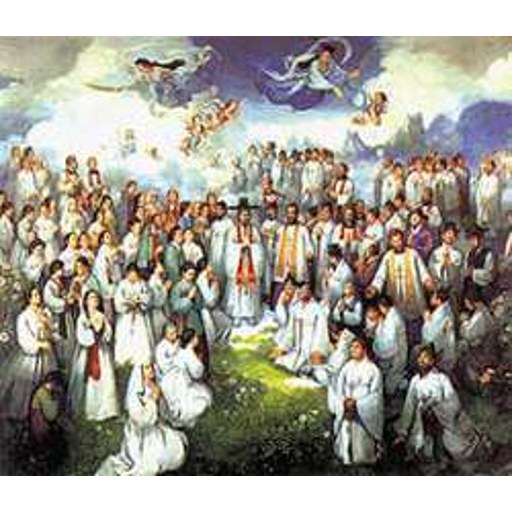
https://www.catholic.org/saints/saint.php?saint_id=7085
License: unknown
Barbara Kwon Hui
Saint- Life Span
- 1794 - 1839 (age 45)
- Feast Day
- 20 September
- Gender
- female
- Church
- Catholic
Places
Roles & Family
Religious Information
Canonization
Biography
Barbara Kwon Hui (Korean: 권희 바르바라) was a nineteenth-century Korean Catholic laywoman who died as a martyr during the Gihae persecution and is venerated among the 103 Korean Martyrs of the Catholic Church. She was born in 1794 in Seoul, then the capital of the Joseon kingdom. Catholicism had entered Korea in 1784 when Yi Seung-hun was baptized in Beijing and returned to form a community of scholars and families, without missionary priests at first. The Joseon court regarded the new religion as subversive because Catholics refused Confucian ancestral sacrifices and were thought to be aligned with Western powers. Several edicts of prohibition and earlier persecutions, including the 1801 Sinyu persecution, had already claimed lives before Kwon Hui’s adulthood.
She married Augustine Yi Kwang-hon, who served the Catholic community as a catechist. The couple had children and sought to transmit the faith within the household, a pattern typical of the early Korean Church, which spread largely through family networks. Living as Catholics required secrecy, the hiding of religious objects, and the constant possibility of denunciation by neighbors or officials. When the Gihae persecution began in 1839, under the authority of the Queen Dowager acting during the minority of King Heonjong, searches and arrests intensified in Seoul and the surrounding provinces.
Augustine Yi Kwang-hon was arrested and put to death in Seoul on 24 May 1839. Barbara Kwon Hui was later imprisoned. In confinement she was subjected to the usual demands that prisoners trample on a crucifix or perform ancestral rites as a sign of apostasy. According to the traditions collected for the causes of the Korean martyrs, she refused and encouraged other detainees, including relatives, to remain steadfast. On 3 September 1839 she was taken out and beheaded at Seoul. She was forty-five years of age. A number of other Catholic women were executed in the capital around the same time. The persecution of 1839–1840 killed many of the leading lay Catholics of the first generations of the Korean Church; the first Korean priest, Andrew Kim Taegon, would be executed in 1846.
Surviving Catholics recovered what remains they could. Devotion to the Korean martyrs grew in the twentieth century. Pope Pius XI beatified seventy-nine of them, Barbara Kwon Hui among them, on 5 July 1925. On 6 May 1984 Pope John Paul II canonized one hundred and three Korean martyrs, including Kwon Hui, at a Mass in Seoul. The Church keeps their memory on 20 September. Barbara Kwon Hui is remembered as an example of the married laity who formed the backbone of Korean Catholicism before and during the missionary era, and of the many women who accepted death rather than renounce baptism.