Barsanuphe de Tver is a saint of the Catholic Church (d. 1576). Barsanuphe de Tver's feast day is celebrated on 11 April and 4 October.
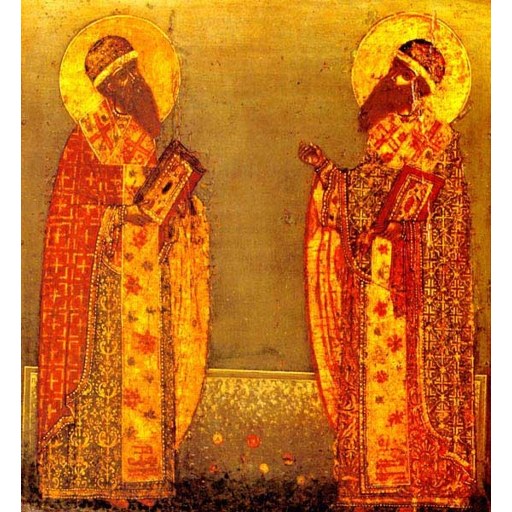
AnonymousUnknown author
License: Public domain
Barsanuphe de Tver
Saint- Life Span
- d. 1576
- Feast Day
- 11 April and 4 October
- Gender
- male
- Church
- Catholic
Places
Relics & Where to Venerate
Location unknown
The bodily remains of Barsanuphe de Tver are a first-class relic. Venerated at Kazansky Bogoroditsky Monastery.
Roles & Family
Canonization
Biography
Saint Barsanuphius of Tver, also known as Barsanuphius of Kazan (Russian: Варсонофий Тверской or Варсонофий Казанский; secular name Ioann, or Ivan Vasilyevich), was a sixteenth-century Russian Orthodox monk, missionary, and bishop. He was born in Serpukhov, in the Grand Principality of Moscow, into a clerical household; hagiographical tradition names his father as a priest called Vasily. In 1512, during a Tatar raid on the region, the young Ioann was carried off into captivity on the steppe, where he remained for about three years. In that period he learned the Tatar language and became closely acquainted with the customs of the Muslim population among whom he lived. After his father ransomed him, he returned to Muscovite territory and entered the Andronikov Monastery in Moscow, receiving the monastic tonsure with the name Barsanuphius. The captivity, unusual among Russian monastic careers of the time, later became the practical foundation of his work as a missionary in the former Kazan Khanate.
In 1544 he was appointed hegumen of the St. Nicholas Peshnoshsky Monastery in the Dmitrov district. After the Muscovite conquest of Kazan in 1552, Tsar Ivan IV and Metropolitan Macarius of Moscow organized an ecclesiastical mission to the newly annexed lands. In 1555 Barsanuphius was raised to the rank of archimandrite and sent to Kazan together with Archbishop Gurias (Gury) and the monk German (Herman), both later venerated as saints. There he founded the Savior-Transfiguration Monastery in the Kazan Kremlin, which served as a base for preaching among the local Tatar population and for the pastoral care of Russian settlers. Contemporary accounts, including the life later composed by Metropolitan Hermogenes of Kazan, emphasize his fluency in Tatar, his reputation as a healer of the sick, and a manner of life that combined strict monastic asceticism with active evangelization and charitable medical practice. The monastery he established became one of the principal religious centers of the new Kazan diocese.
In 1567 Barsanuphius was consecrated Bishop of Tver (often styled Tver and Kashin) and left Kazan for that ancient see. He governed Tver for only a few years and was remembered there for an austere personal rule rather than for administrative innovation. Afflicted by blindness, he resigned the episcopal throne in the early 1570s and returned to the Transfiguration Monastery in Kazan, the house he had founded. He died there on 11 April 1576 and was buried in the monastery cathedral by Archbishop Tikhon of Kazan. He had never married; his adult life was entirely monastic and episcopal, and no children are recorded.
On 4 October 1595, at the instance of Tsar Feodor Ivanovich, Metropolitan Hermogenes of Kazan (later Patriarch of Moscow) uncovered the relics of Barsanuphius and of Archbishop Gurias, which were reported to be incorrupt. That uncovering is treated in the Russian Orthodox tradition as their glorification as saints. Barsanuphius is commemorated on 11 April, the day of his repose, and on 4 October, the day of the uncovering of the relics; he is also remembered in the synaxes of the saints of Kazan and of Tver. He is venerated as a missionary bishop and as one of the enlighteners of the Kazan region. His original burial place was the Savior-Transfiguration Monastery in Kazan; the later history of the relics includes removal during the Soviet period and subsequent return to church custody in Kazan.