Bartolo Longo is a saint of the Catholic Church (1841 - 1926). Bartolo Longo's feast day is celebrated on 5 October.
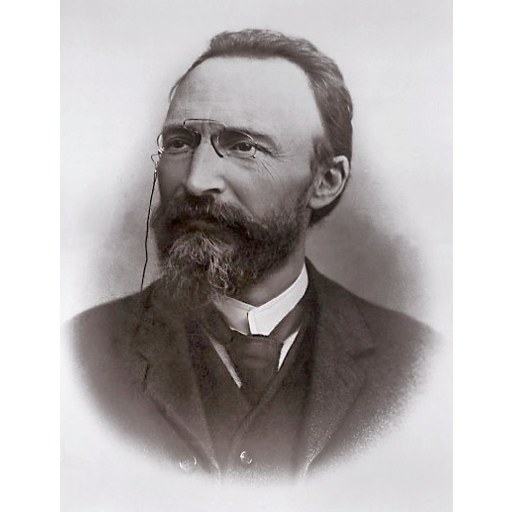
Unknown authorUnknown author
License: Public domain
Bartolo Longo
Saint- Life Span
- 1841 - 1926 (age 85)
- Feast Day
- 5 October
- Gender
- male
- Church
- Catholic
Places
Roles & Family
Religious Information
Canonization
Biography
Bartolo Longo was born on 10 February 1841 in Latiano, in the province of Brindisi in Apulia, then part of the Kingdom of the Two Sicilies. He came from a prosperous professional family; his father was a physician. Baptized and raised as a Catholic, he learned the Rosary in childhood from his mother, whose relatively early death was a serious blow. He pursued secondary studies and then law at the University of Naples, qualifying as an advocate in 1864. Mid-nineteenth-century Naples was marked by political anticlericalism and by a fashionable interest in spiritualism and the occult. Longo entered those circles, abandoned the practice of the faith, and, according to the consistent tradition of his later biographers, took part in spiritist séances and was ritually dedicated as a priest of Satan. The involvement was followed by a severe nervous and spiritual collapse, with depression, confusion, and a sense of diabolical oppression that brought him close to despair.
Catholic acquaintances, among them the Dominican friar Alberto Radente, drew him back to the Church in the early 1870s. After a general confession and a period of spiritual reconstruction he was received into the Third Order of Saint Dominic, taking the tertiary name Rosario in honour of the Rosary, which became the centre of his spirituality. Seeking a field in which to make reparation, he accepted in 1872 the administration of an estate in the Valley of Pompeii, a poor, malaria-ridden rural district near the ancient ruins, whose inhabitants lived in religious neglect. There he began to catechize the people, to gather them for the Rosary, and to restore a dilapidated church. He obtained from Naples a damaged painting of Our Lady of the Rosary, had it repaired, and enshrined it; the image became the focus of a rapidly growing popular devotion.
Those local efforts grew into one of the principal Marian enterprises of modern Italy. Longo organized the construction of a large sanctuary, later raised to the rank of pontifical basilica, and surrounded it with charitable institutions, including orphanages, schools, and works for the sons and daughters of prisoners, a form of social apostolate then uncommon. In 1885 he married the widowed Countess Mariana de Fusco. The marriage, entered with ecclesiastical encouragement, was lived in continence; it regularized the legal and financial basis of the Pompeian foundations and gave him a collaborator. He wrote historical and devotional texts connected with the shrine and composed the Supplication to the Queen of the Holy Rosary of Pompeii, a prayer that remains in use among pilgrims. Successive popes, notably Leo XIII, showed favour to the sanctuary and to the Rosary apostolate associated with it.
Longo spent the remainder of his life at Pompeii directing the shrine and its charities. His wife died in 1924. He himself died at Pompeii on 5 October 1926 and was buried in the crypt of the basilica he had founded. Pope John Paul II beatified him on 26 October 1980, presenting him as an apostle of the Rosary and as a layman whose conversion bore fruit in lasting institutions of worship and charity. He has not been canonized. In Catholic memory he is associated above all with the sanctuary of Our Lady of the Rosary of Pompeii and with the possibility of a complete return to faith after involvement in the occult.