Baudouin I of Belgium is a servant of god of the Catholic Church (1930 - 1993).
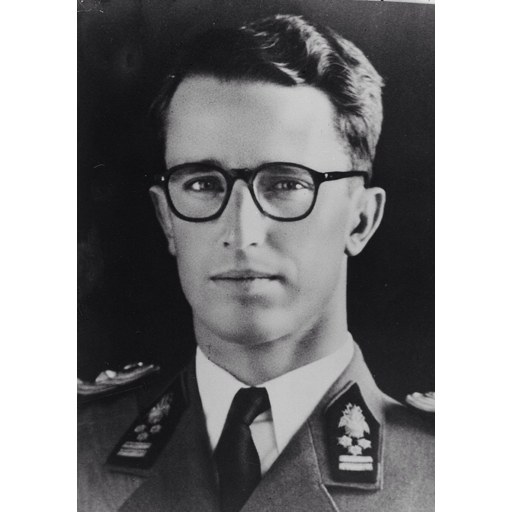
Anefo
License: CC0
Baudouin I of Belgium
Servant of God- Life Span
- 1930 - 1993 (age 63)
- Gender
- male
- Church
- Catholic
Places
Relics & Where to Venerate
Location unknown
The bodily remains of Baudouin I of Belgium are a first-class relic. Venerated at Royal Crypt.
Roles & Family
Religious Information
Biography
Baudouin, known in Dutch as Boudewijn and in French as Baudouin, was King of the Belgians from 1951 until 1993. He was born on 7 September 1930 at Stuyvenberg Castle in Laeken, near Brussels, the first son of King Leopold III and Queen Astrid, who had been born a princess of Sweden. A younger brother, Albert, and a sister, Joséphine-Charlotte, completed the immediate family. Queen Astrid died in a car accident at Küssnacht in Switzerland in 1935, when Baudouin was not yet five years old. The German invasion of Belgium in 1940 placed the royal household under occupation; in 1944 the family was deported by the German authorities, first to Germany and then to Austria, from which they were liberated in 1945. After the war, public controversy over Leopold III's conduct during the occupation, known as the Royal Question, prevented the king's immediate return. A regency under Prince Charles, Leopold's brother, governed Belgium while Leopold remained in exile in Switzerland.
A national referendum in 1950 permitted Leopold's return, but political unrest soon led him to transfer his royal powers to Baudouin and, on 16 July 1951, to abdicate. Baudouin swore the constitutional oath before the united Chambers on 17 July 1951 and became King of the Belgians at the age of twenty. On 15 December 1960 he married Doña Fabiola de Mora y Aragón, a Spanish aristocrat. The marriage, celebrated in Brussels, was widely popular, but it remained childless after several miscarriages. Under the Belgian constitution the crown therefore passed, at Baudouin's death, to his brother Albert.
Baudouin's forty-two-year reign saw the independence of the Belgian Congo in 1960, a process in which the young king played a highly visible and later much-debated role, including a speech at the independence ceremonies that praised the colonial work of Leopold II and provoked a famous rebuttal by Congolese leader Patrice Lumumba. At home, Belgium was transformed by successive state reforms into a federal kingdom structured around Flemish, French, and German language communities and corresponding regions. Linguistic conflict, economic change, and the decline of traditional heavy industry in Wallonia formed the domestic background of the reign. Baudouin generally sought to act as a symbol of national unity above party and language, and he undertook extensive visits throughout the country and abroad.
A convinced Roman Catholic, Baudouin allowed his religious convictions to influence his public duties more openly than most contemporary European monarchs. In the spring of 1990 he refused to give the royal assent to a bill that liberalized abortion. Because Belgian law required the king's signature for a bill to become law, the government and parliament resorted to a constitutional device: they declared the king unable to reign, the Council of Ministers exercised the royal function and promulgated the statute, and Baudouin was restored to his powers the following day. The episode illustrated both the strictly limited character of the modern Belgian monarchy and the king's personal unwillingness to separate his conscience from his office. He was also known for concern with poverty, immigration, and the moral tone of society, and he maintained contacts with Catholic lay associations.
Baudouin died of a heart attack on 31 July 1993 at Villa Astrida in Motril, in the Spanish province of Granada, while on holiday with Queen Fabiola. His death produced a strong public reaction in Belgium. He was succeeded by his brother, King Albert II, and was interred in the Royal Crypt of the Church of Our Lady of Laeken in Brussels, the traditional burial place of the Belgian dynasty. He has not been beatified or canonized by the Catholic Church, nor does he possess an official feast day or list of patronages; some Belgian Catholics have nonetheless expressed interest in a possible cause for beatification on account of his personal piety and the 1990 stand on abortion.