Benigna di Breslavia is a saint of the Catholic Church.
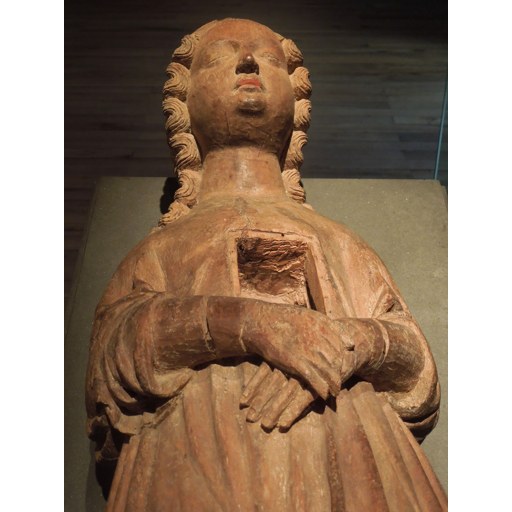
Ablakok
License: CC BY-SA 4.0
Benigna di Breslavia
Saint- Gender
- female
- Church
- Catholic
Places
Roles & Family
Biography
Benigna of Wrocław, known in Italian as Benigna di Breslavia, is an obscure figure in Christian hagiography associated with the city of Wrocław in Silesia, historically called Breslau in German and Breslavia in Italian. Wrocław, on the Oder River, was a major ecclesiastical and political centre of medieval Silesia, a region that in the High and Late Middle Ages formed part of the Piast duchies of Poland and later passed under Bohemian and Habsburg rule. The personal name Benigna, from the Latin for kindness or gentleness, was borne by a number of holy women in medieval Europe, which makes secure identification of this particular person difficult in the absence of a well-documented vita, necrology entry, or continuous liturgical cult in the major martyrologies and diocesan calendars.
Reliable historical sources available in standard reference works do not preserve a verified year of birth or death for Benigna of Wrocław, nor a confirmed place of birth distinct from her traditional association with the city. It is not possible from those sources to determine whether she was a member of a religious order, a recluse, a martyr, or a pious laywoman, nor whether she had any connection with the Cistercian foundation at Trzebnica established by Saint Hedwig of Silesia in the early thirteenth century, or with the Dominican, Franciscan, or Poor Clare houses that existed in Wrocław itself. Assignments of her life to a specific century, or to events such as the Mongol invasions of Silesia, cannot be substantiated from the evidence consulted and are therefore omitted.
The diocese of Wrocław, erected in the year 1000 as one of the original Polish sees, commemorated a number of holy men and women, of whom Saint Hedwig of Andechs, Saint Hyacinth of Poland, and Blessed Ceslaus are among the best attested. Local or conventual veneration of lesser-known women sometimes existed alongside these major cults, especially in Cistercian and mendicant communities, but such veneration did not always result in a formally recognized beatification or canonization whose documentation survives in widely accessible form. No verified feast day, list of patronages, or act of canonization or beatification by a named pope can be confirmed for Benigna of Wrocław from the sources used here.
Because of this scarcity of evidence, it would be improper to reconstruct a detailed life, family background, or spiritual career. Further research in the archives of the Archdiocese of Wrocław, in medieval Silesian necrologies, and in the records of the relevant religious orders would be required to establish whether Benigna was a historical person with a continuous cult or a name that entered later hagiographical lists by confusion with another saint. Until such evidence is produced, she remains a poorly documented figure whose principal certain attributes are her female gender, her traditional association with Wrocław, and her appearance in some listings of holy persons connected with that city.