Bérégise d'Andage is a saint of the Catholic Church. Bérégise d'Andage's feast day is celebrated on 2 October.
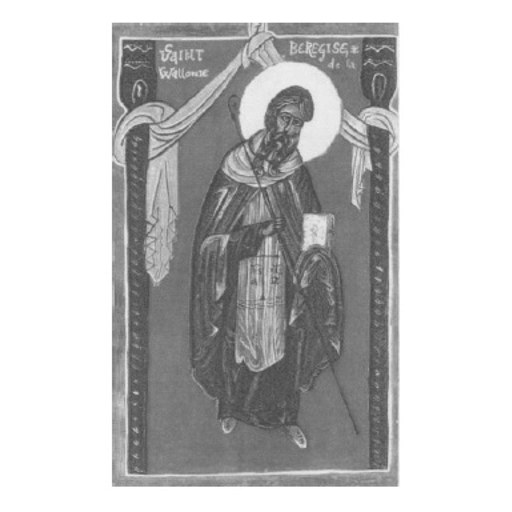
Jpdawance
License: CC BY-SA 3.0
Bérégise d'Andage
Saint- Feast Day
- 2 October
- Gender
- male
- Church
- Catholic
Places
Roles & Family
Biography
Bérégise d'Andage (Latin Beregisus; also Beregise) was a Frankish priest and monastic founder of the late Merovingian period, associated with the establishment of the monastery of Andage in the Ardennes, on the site of the later Abbey of Saint-Hubert in what is now the Belgian province of Luxembourg. Almost nothing about him can be fixed from contemporary charters or chronicles. The principal narrative source is a later hagiographical Vita Beregisi, whose date and reliability are uncertain; historians generally accept that a Pippinid-backed house was founded at Andage in the later seventh century and that a founder named Bérégise was remembered there, while treating many biographical details in the Life as legendary.
According to that traditional account, Bérégise was of noble family, sometimes said to have come from Aquitaine. He is presented as a priest who served at the court of Pepin of Herstal, mayor of the palace of Austrasia. With the support of Pepin and of Pepin’s wife Plectrude he is said to have established a monastery dedicated to Saint Peter at Andage (Andagium), in the forested Ardennes. The foundation is conventionally placed in the later seventh century, often around 687, but that year is traditional rather than independently documented. Bérégise is regarded as the first abbot of the community. The sources portray him as a cleric and abbot, not as a married man.
Andage remained a relatively modest house until the ninth century. In 825 the relics of Saint Hubert, bishop of Liège, were translated there; thereafter the monastery became known as Saint-Hubert and developed into a major pilgrimage centre and, in time, a Benedictine abbey. Bérégise’s own cult stayed local. He is commemorated as a saint in the region, with a feast commonly given as 2 October. He was not the object of a formal papal canonization of the later medieval or modern type; his sainthood belongs to the older pattern of local veneration of a founder-abbot.
No verified year of birth or death survives. Later tradition sometimes places his death in the first quarter of the eighth century, occasionally around 725, and assumes that he died at or near the monastery he had founded and was buried there. Those dates and the burial are pious inference rather than attested fact. He is not recorded as pope or patriarch, and no historically secure list of patronages is attached to his name.