Bernardo de Vasconcelos is a venerable of the Catholic Church (1902 - 1932).
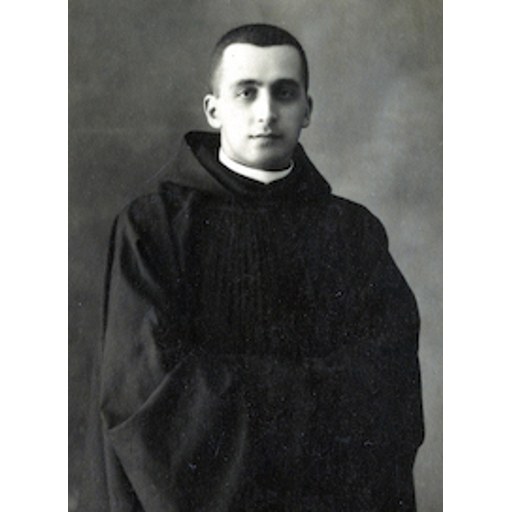
Unknown authorUnknown author
License: CC BY 4.0
Bernardo de Vasconcelos
Venerable- Life Span
- 1902 - 1932 (age 30)
- Gender
- male
- Church
- Catholic
Places
Roles & Family
Biography
Bernardo de Vasconcelos was a Portuguese writer and poet active in the first decades of the twentieth century. He is remembered chiefly in Catholic literary circles in Portugal as an author of religious verse and as a young intellectual who died in early adulthood. Standard biographical notices place his birth in Lisbon in 1902 and his death in 1932. He is not a canonized saint, nor is he known to have been beatified; the present account therefore treats him as a historical figure of Catholic culture rather than as a member of the calendar of saints.
He belonged to the generation that came of age during the Portuguese First Republic (1910–1926), a period marked by conflict between secularizing republican governments and the Catholic Church. Like a number of his contemporaries, Vasconcelos turned to literature as a means of expressing a restored Catholic identity. His surviving work consists of poems and shorter prose pieces in which themes of Christ’s Passion, spiritual exile, and longing for God recur. He does not appear to have entered a religious order; available accounts present him as a layman.
Vasconcelos died in 1932, at about thirty years of age. Later Catholic readers have sometimes described his life in quasi-hagiographic terms—emphasizing youth, illness, and piety—but no public cult, feast day, or official ecclesiastical recognition is recorded in the usual hagiographical repertoires. Information about his family life, possible marriage, children, exact place of death and burial, and any association with a particular diocese or religious congregation remains sparse in readily accessible historical literature. He should not be confused with better-known Portuguese or Brazilian public figures who share similar surnames.
Because he is an obscure author outside specialist studies of Portuguese Catholic letters, many standard fields of a saint’s dossier—patronages, a canonizing pope, a liturgical feast—are simply inapplicable or unknown. The record supports only a modest portrait: a short-lived Portuguese Catholic poet of the early twentieth century whose work reflected the religious revival of his time and whose memory has been kept alive mainly by posthumous literary interest rather than by popular devotion or formal processes of the Church.