Bishop Silvanus is a saint of the Catholic Church (d. 310). Bishop Silvanus's feast day is celebrated on 4 May.
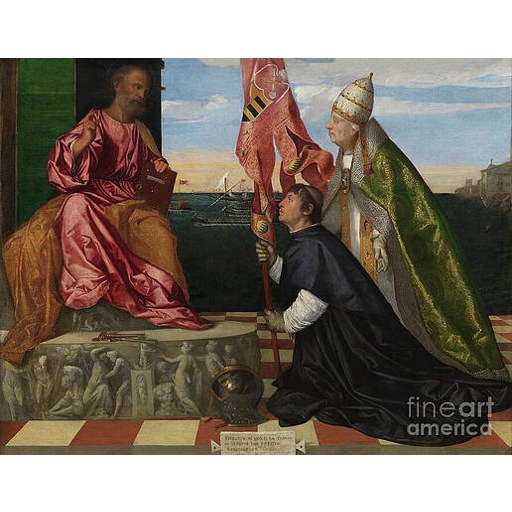
https://bridgemanondemand.com/art/paintings/bishop
License: unknown
Bishop Silvanus
Saint- Life Span
- d. 310
- Feast Day
- 4 May
- Gender
- male
- Church
- Catholic
Places
Roles & Family
Biography
Bishop Silvanus, remembered in the early church as bishop of the churches about Gaza, belongs to the generation of Palestinian clergy who endured the Great Persecution of the early fourth century. Almost everything that can be said of him with historical confidence derives from Eusebius of Caesarea, a contemporary who treated the Palestinian martyrs both in the Ecclesiastical History and in the separate Martyrs of Palestine. In those works Silvanus is not given a full biography. He appears as bishop of the congregations in the Gaza region and as an aged man at the time of his death, which implies a long prior ministry, though no year of birth, ordination, or episcopal consecration has been preserved. He was neither pope nor patriarch; his charge was a local Palestinian one, apparently over a cluster of churches rather than a single urban cathedral in the later medieval sense.
The persecution begun under Diocletian in 303, and continued in the East under Galerius and Maximinus Daia, struck the Christian communities of Palestine with successive measures against buildings, scriptures, and clergy. Gaza and its surrounding towns, on the coast and on the routes toward Egypt, formed a recognizable ecclesiastical district. As the persecution intensified, many confessors were not immediately executed but were condemned to the imperial copper mines of Phaeno (Phaenon), in the arid country south of the Dead Sea, in the sphere of Palaestina Tertia. Eusebius records that Silvanus was among those sent there. The mines were notorious for heat, forced labour, mutilation of prisoners, and the degradation of clergy. Even under those conditions the condemned Christians maintained a common life of prayer, and the aged bishop is presented as a pastoral figure among them.
Eusebius places the end of Silvanus’s life at the beginning of the eighth year of the persecution, that is about 310, while Maximinus Daia still ruled the East. At Phaeno a company of Christians, Silvanus at their head, were beheaded. Eusebius gives the number of companions as thirty-nine, making forty in all, a figure retained in later liturgical memory. He treats the death of the old bishop and his fellow prisoners as among the last great slaughters of the Palestinian martyr acts before the easing of the persecution. No reliable account survives of the disposal of the bodies or of a tomb. The Roman Martyrology commemorates Silvanus on 4 May as bishop of Gaza, crowned in Palestine with many others in the Diocletianic persecution. Eastern calendars likewise keep him among the Palestinian martyrs.
Beyond this outline, later legend has little independent value. Nothing certain is known of his family, of any marriage before ordination, or of a monastic profession in the later sense of a religious order. His cult is that of an early martyr, established by contemporary testimony and by liturgical commemoration rather than by a medieval papal process of canonization or beatification. He remains a historically attested bishop-martyr of the Gaza region, whose old age, exile to the Phaeno mines, and beheading with thirty-nine companions were recorded by Eusebius and preserved in the martyrological tradition of the church.