Boniface IV is a saint of the Catholic Church (d. 615). Boniface IV's feast day is celebrated on 8 May.
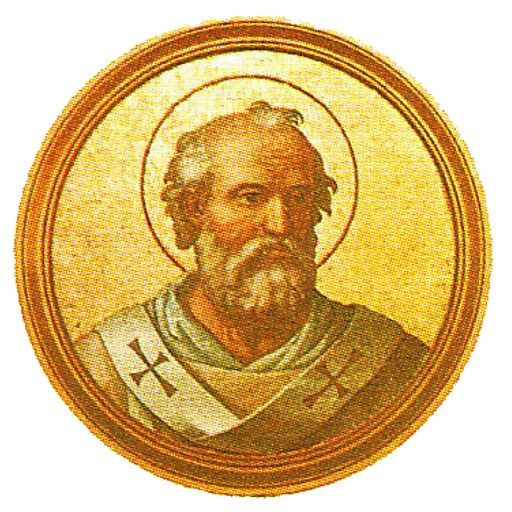
original uploader User:Deep also it
License: Public domain
Boniface IV
Saint- Life Span
- d. 615
- Feast Day
- 8 May
- Gender
- male
- Church
- Catholic
Places
Roles & Family
Religious Information
Biography
Pope Boniface IV, Bishop of Rome from 608 until his death in 615, was born in the city of Valeria in the territory of the Marsi in central Italy, the son of a physician named John, as recorded in the Liber Pontificalis. The year of his birth is not preserved in any reliable source. He is traditionally described as a disciple of Pope Gregory I (Gregory the Great) and is said to have belonged to the Benedictine monastic tradition. Before his elevation he served the Roman Church as a deacon. After the death of Pope Boniface III in November 607 the see of Rome remained vacant for many months; Boniface IV was consecrated on 25 August 608.
The most celebrated act of his pontificate was the conversion of the Pantheon, the great Roman temple dedicated to all the gods, into a Christian church. Emperor Phocas, then ruling in Constantinople, granted the building to the pope. Boniface dedicated it to the Blessed Virgin Mary and all the Christian martyrs under the title Sancta Maria ad Martyres. According to long-standing tradition this dedication took place on 13 May 609, and relics of martyrs were brought from the catacombs and placed in the new church. The transformation of the Pantheon has often been regarded as a symbolic turning point in the Christianization of the monumental fabric of Rome.
In 610 Boniface held a synod in Rome which was attended by Mellitus, bishop of London, who had come from England to consult the Apostolic See about the affairs of the young English Church. The pope sent Mellitus back with letters addressed to Archbishop Laurence of Canterbury, to Mellitus and Justus, and to King Æthelberht of Kent, encouraging the English mission that Gregory the Great had inaugurated. Boniface also obtained permission to convert his own house in Rome into a monastery, where he is said to have lived in monastic observance even while occupying the papal office. His relatively short pontificate fell in a period of hardship for Italy, still marked by the after-effects of war, famine, and pestilence in the early seventh century.
Boniface IV died in Rome on 8 May 615 and was buried in the portico of St. Peter's Basilica. His remains were later translated on several occasions: in the tenth or eleventh century, again toward the end of the thirteenth century under Pope Boniface VIII, and finally into the new St. Peter's Basilica on 21 October 1603. He was succeeded, after a vacancy, by Pope Adeodatus I (Deusdedit). Venerated as a saint from an early date, he is commemorated in the Roman Martyrology on 8 May. His cult belongs to the era before the formal processes of canonization later developed by the Roman Church.