Borys is a saint of the Eastern Orthodox Church (1875 - 1937).
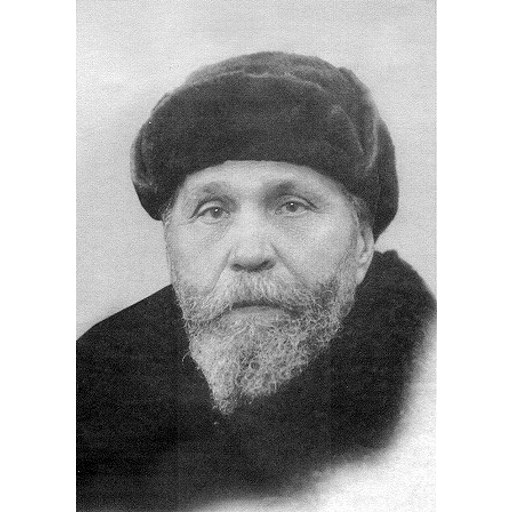
Unknown authorUnknown author
License: Public domain
Borys
Saint- Life Span
- 1875 - 1937 (age 62)
- Gender
- male
- Church
- Eastern Orthodox
Places
Relics & Where to Venerate
Location unknown
The bodily remains of Borys are a first-class relic. Venerated at Q18401111.
Canonization
Biography
Prince Borys, known in Church Slavonic sources as Boris and commemorated together with his brother Hlib (Gleb) as one of the first saints of Kievan Rus', was a son of Grand Prince Volodymyr Sviatoslavych, under whom the ruling elite and much of the population of Rus' accepted baptism in the late tenth century. Contemporary and near-contemporary texts, principally the Primary Chronicle and the two eleventh-century hagiographical works known as the Tale (Skazanie) and the Reading (Chtenie) concerning Boris and Gleb, do not record a precise year or place of birth. Borys was old enough by 1015 to hold the principality of Rostov and to lead a military force against the Pechenegs. Hagiographers portray him as a devout young ruler who preferred psalmody and the teachings of the newly adopted Christian faith to the customary struggles among the sons of a deceased grand prince.
When Volodymyr died in 1015, another son, Sviatopolk, established himself in Kyiv and resolved to remove his brothers as potential claimants. Borys, returning from the steppe campaign, learned of these events while his camp was on the Alta River. The vitae state that his druzhina urged him to occupy Kyiv, but he refused to take up arms against an elder brother, citing the evangelical precept of non-resistance. Assassins dispatched by Sviatopolk—identified in the sources as Putsha and his companions, with Varangians participating—found Borys at prayer in his tent. He was wounded with spears; a servant of Hungarian origin named George (Georgii) who threw himself over the prince was slain. Borys was then dispatched with a sword. The body was taken to Vyshhorod, north of Kyiv, and interred in the wooden Church of Saint Basil.
The killing of Hlib followed shortly afterward, likewise by agents of Sviatopolk. The two brothers were soon regarded as holy passion-bearers (strastoterptsy), saints who accepted an unjust death in imitation of Christ rather than as martyrs who died for refusing to deny the faith. Miracles were reported at their tombs. Under Yaroslav the Wise, who defeated Sviatopolk and ruled from Kyiv, their cult received princely support. Relics were solemnly translated in 1072 and again in 1115; masonry churches replaced the earlier wooden structure at Vyshhorod. Their principal feast days in the Orthodox calendar are 24 July (the traditional date of Borys's death) and 2 May (commemoration of the translations). Icons customarily show the brothers as beardless or lightly bearded princes holding crosses.
Borys and Hlib became the prototype of native Rus' sanctity and were invoked as protectors of the land and of the Rurikid dynasty. In later centuries Muscovite rulers continued to honor them as heavenly patrons of Russia. They are venerated in the Eastern Orthodox Churches and in the Ukrainian Greek Catholic Church. The surviving sources mix chronicle reportage with homiletic expansion; speeches placed in Borys's mouth, lists of miracles, and moral comparisons with Abel and with Joseph reflect the literary conventions of eleventh-century hagiography rather than verbatim records. No independent documentary evidence survives for many of the personal details, and the exact political calculations of 1015 remain a matter of historical discussion. What is firmly attested is the early and enduring cult centered on Vyshhorod and the distinctive title of passion-bearer that the Church of Rus' conferred upon the two princes.