Brother Lawrence is a venerable of the Catholic Church (1614 - 1691).
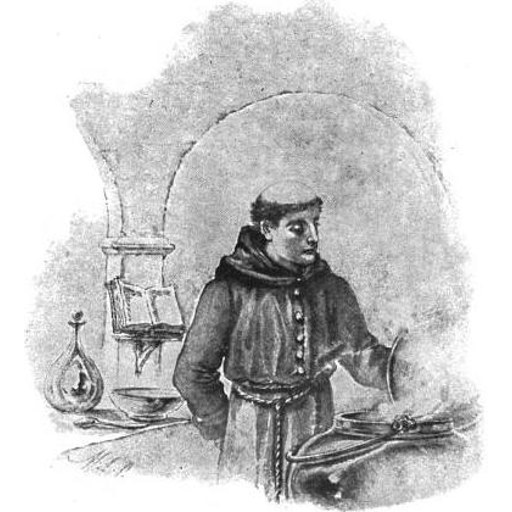
Unknown authorUnknown author
License: Public domain
Brother Lawrence
Venerable- Life Span
- 1614 - 1691 (age 77)
- Gender
- male
- Church
- Catholic
Places
Roles & Family
Religious Information
Biography
Nicolas Herman, later known as Brother Lawrence of the Resurrection, was born in 1614 in the village of Hériménil near Lunéville in the Duchy of Lorraine. He came from a modest family and received little formal education. As a young man he served as a soldier in the Thirty Years' War. Around the age of eighteen he underwent a lasting conversion. He later recalled that the sight of a tree stripped bare in winter, which he knew God would clothe again with leaves and fruit, filled him with a vivid sense of the providence and power of God and moved him to give himself wholly to the divine will. The impression never left him and became the root of his spiritual life.
Wounded in service and left with a permanent limp, Herman left the army and worked for a time as a footman in Paris. Finding secular employment unsatisfying, he sought admission to religious life. In 1640 he entered the priory of the Discalced Carmelites in Paris as a lay brother and received the name Lawrence of the Resurrection. The Discalced Carmelites, reformed in the sixteenth century by Teresa of Avila and John of the Cross, combined contemplative prayer with a simple common life. As a lay brother Lawrence was not ordained; his role was to perform the manual work of the house while the choir religious recited the Divine Office.
For years he served in the monastery kitchen, a task for which he felt a natural aversion, and he also repaired sandals for the community. In these ordinary duties he developed what he called the practice of the presence of God: a continual, loving attentiveness to God in the midst of pots, pans, and daily chores. He taught that one need not wait for formal times of prayer, that the kitchen could be as much a place of communion with God as the chapel, and that lapses in attention should be met by a simple, peaceful return to God rather than by anxiety. His recollection and charity drew members of his community and outside visitors to seek his counsel.
In the 1660s the Parisian priest Joseph de Beaufort recorded four conversations with Brother Lawrence and later gathered letters the brother had written to various correspondents. After Lawrence's death these texts, together with a set of spiritual maxims, were published. The resulting little book, known in English as The Practice of the Presence of God, presents in plain language a way of living always in God's company through faith and love, a way Lawrence believed was open to people in every state of life. Brother Lawrence died in the Paris Carmel on 12 February 1691, having spent more than fifty years in religious life.
He has never been formally beatified or canonized by the Catholic Church. Nonetheless his reputation for humble holiness and the wide circulation of his teaching have kept his memory alive. The Practice of the Presence of God has been translated into many languages and read across confessional lines, influencing Catholic, Protestant, and other Christian readers who look for a practical path of interior prayer in ordinary work and daily life. Carmelite communities in particular continue to honor him as an exemplar of finding God in the midst of humble tasks.