Brychan Brycheiniog is a saint of the Catholic Church. Brychan Brycheiniog's feast day is celebrated on 6 April.
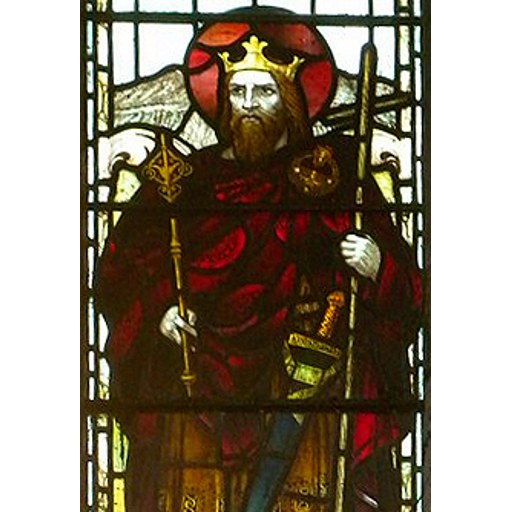
Menter Brycheiniog&Maesyfed
License: CC BY-SA 4.0
Brychan Brycheiniog
Saint- Feast Day
- 6 April
- Gender
- male
- Church
- Catholic
Places
Roles & Family
Religious Information
Biography
Brychan Brycheiniog is a legendary king of the early medieval Welsh kingdom of Brycheiniog in what is now south-central Wales, traditionally placed in the fifth century. The kingdom, later known as Brecknockshire, took its name from him. He is also venerated as a saint in Welsh, Cornish, and Breton tradition, chiefly as the progenitor of a large family of holy men and women rather than as a monastic founder or martyr. Almost everything recorded about him derives from later medieval genealogical tracts and hagiographical compilations, notably the Latin texts De Situ Brecheniauc and Cognatio Brychan, which survive in manuscripts of the thirteenth century and later but appear to draw on earlier Welsh material. Modern historians treat Brychan as a largely legendary or composite figure, possibly reflecting Irish settlement in the region, rather than as a fully historical individual whose life can be dated with precision.
According to these medieval accounts, Brychan was the son of an Irish prince named Anlach, himself said to be the son of Coronac, and of Marchell, daughter and heiress of Tewdrig, ruler of Garthmadrun. The story relates that Marchell crossed to Ireland to escape a plague, married Anlach there, and that Brychan was born in Ireland. The family later returned to Wales. As a youth Brychan is said to have been given as a hostage to a ruler of Powys named Banadl, from whose household he eventually returned to claim his maternal inheritance. Garthmadrun was thereafter known as Brycheiniog. The Irish element in the legend is consistent with other evidence for Irish dynasties, often associated with the Déisi or Uí Liatháin, establishing themselves in parts of south Wales in the late Roman and sub-Roman periods, though the personal details of Brychan's parentage cannot be independently verified.
Brychan is portrayed as a married king rather than a celibate cleric. Tradition assigns him one or more wives, of whom Prawst, sometimes described as a daughter of Tudwal of the North, is the name most often cited. The central feature of his legend is an exceptionally large progeny of sons and daughters, many of whom were later honoured as saints. Welsh lists vary, commonly enumerating around eleven sons and two dozen daughters, or in some versions twenty-four of each. Among the best-known of those later called the Children of Brychan are Saint Cynog, Saint Gwladys (wife of Gwynllyw and mother of Saint Cadoc), Saint Tydfil, Saint Eluned, Saint Clydwyn, and Saint Dingad. Cornish and Devonian tradition independently claims a similar family of local saints, including Nectan, Keyne, Endelienta, and Morwenna, as children of Brychan, a claim that may represent later genealogical grafting or a memory of related British Christian families rather than a single historical household.
No reliable contemporary source records the date or place of Brychan's death or burial. Later folklore associates him with Lundy Island, sometimes called Ynys Brychan, with sites in Cornwall, and with various churches and wells in Breconshire. He was commemorated as a saint, with a feast commonly given as 6 April, though the cult was local and never the subject of a formal papal canonization. The historical kernel, if any, is likely that of an Irish-descended ruler or dynastic ancestor in fifth-century Brycheiniog whose name became a convenient focus for explaining the origins of the kingdom and for grouping a large number of otherwise poorly documented local saints. The abundance of conflicting lists of children and the absence of early independent testimony mean that the details of his life remain in the realm of legend rather than established biography.