Caesar Baronius is a venerable of the Catholic Church (1538 - 1607).
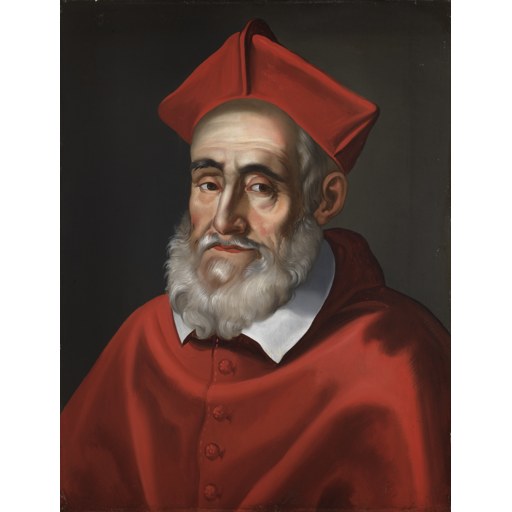
Unknown authorUnknown author
License: CC0
Caesar Baronius
Venerable- Life Span
- 1538 - 1607 (age 69)
- Gender
- male
- Church
- Catholic
Places
Relics & Where to Venerate
Location unknown
The bodily remains of Caesar Baronius are a first-class relic. Venerated at Santa Maria in Vallicella.
Roles & Family
Religious Information
Biography
Cesare Baronio, known in Latin as Caesar Baronius, was born in 1538 at Sora in the Kingdom of Naples, the son of Camillo Baronio and Porzia Febonia. He was sent to Naples to study law, but he turned from a legal career toward the Church and in the 1550s settled in Rome. There he attached himself to Philip Neri, whose community of priests and lay collaborators later became the Congregation of the Oratory. Baronius was ordained a priest in 1564. For decades he combined pastoral work in Rome with the historical studies that Neri urged upon him as a means of defending Catholic tradition against Protestant historiography.
Baronius became the leading ecclesiastical historian of the Catholic Reformation. At Neri's prompting he undertook a large-scale history of the Church intended as a reply to the Magdeburg Centuries, the Protestant compilation that portrayed the medieval Church as a long decline from apostolic purity. The result was the Annales Ecclesiastici, published in twelve folio volumes from 1588 onward and carrying the narrative from the birth of Christ to 1198. Drawing on Vatican manuscripts and a wide range of printed sources, Baronius argued for the continuity of Catholic doctrine and of papal authority. He was also the principal scholar responsible for the revised Roman Martyrology issued in the late sixteenth century, whose historical notes sought to correct legendary material while retaining the traditional calendar of saints.
In 1593 Philip Neri resigned as superior of the Roman Oratory and Baronius was chosen to succeed him. Pope Clement VIII created him cardinal in 1596, with the title of Santi Nereo e Achilleo, and in 1597 appointed him Librarian of the Holy Roman Church, which gave him still fuller access to the Vatican collections. Baronius took part as a consultor in the negotiations that led to the reconciliation of King Henry IV of France with the Holy See. In the two conclaves of 1605 he was a serious candidate for the papacy, but the Spanish crown opposed him, in part because of his published rejection of the so-called Sicilian Monarchy, a claim of extraordinary royal rights over the Church in Sicily. He was not elected.
Baronius died in Rome in 1607 and was buried in Santa Maria in Vallicella, the Chiesa Nuova of the Oratorians. His Annales remained a standard work of Catholic church history for generations, even as later scholarship revised many of his particular conclusions. A reputation for personal austerity and devotion accompanied his fame as a scholar. The cause for his canonization was introduced in the seventeenth century, and in 1745 Pope Benedict XIV declared that he had practiced the virtues to a heroic degree, conferring the title of Venerable. He has not been beatified or canonized.