Caesarius of Arles is a saint of the Catholic Church (470 - 542). Caesarius of Arles's feast day is celebrated on 27 August.
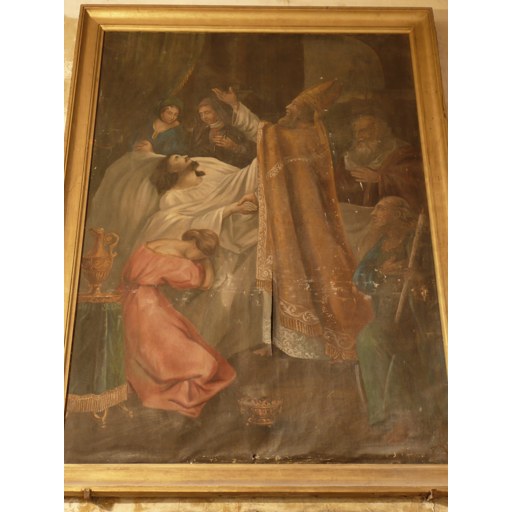
Jean-Baptiste Marie Fouque
License: CC BY-SA 3.0
Caesarius of Arles
Saint- Life Span
- 470 - 542 (age 72)
- Feast Day
- 27 August
- Gender
- male
- Church
- Catholic
Places
Roles & Family
Religious Information
Biography
Caesarius of Arles was among the most important bishops of sixth-century Gaul, a monk-formed pastor whose sermons, monastic rules, and synodal activity shaped Latin Christianity in the post-Roman West. He was born at Cabillonum, today Chalon-sur-Saône, in Burgundian territory, of a Gallo-Roman Catholic family. In adolescence he left home for the monastery of Lérins, off the Provençal coast, then famous for its austere common life and for the bishops it supplied to the Gallic church. Excessive fasting and vigils there ruined his health, and Abbot Porcarius sent him to Arles. Bishop Aeonius, a kinsman, retained him, ordained him deacon and priest, and set him over a monastery near the city. On Aeonius’s death the clergy and people of Arles elected Caesarius bishop, probably in 502. He remained bishop until 542, a tenure of about four decades during which Arles was the ecclesiastical metropolis of southern Gaul.
The political setting was unstable. Provence and the lower Rhône passed from the Visigoths to the Ostrogoths and, in the 530s, toward Frankish control. Caesarius was suspected of political disloyalty and was exiled for a time to Bordeaux under the Visigothic king Alaric II, around 505. After the Ostrogothic occupation of Provence he was again accused of treason and taken to Theodoric’s court at Ravenna; Theodoric acquitted him and treated him with honour. He then visited Rome. Pope Symmachus granted him the pallium and designated the bishop of Arles as vicar of the apostolic see in Gaul, a dignity later popes confirmed. These grants were intended both to honour Caesarius and to bind the Gallic church more closely to Rome amid Arian barbarian kingdoms.
As metropolitan and papal vicar, Caesarius gathered councils to reform clergy and define doctrine. The Council of Agde (506), held under Visigothic licence, issued canons on clerical discipline, marriage, church property, and liturgical order. Other synods at Arles and elsewhere continued this work. The Second Council of Orange, held in 529, is his most famous. Its canons, drafted under his influence and drawing on Augustine and on earlier African and papal documents, condemned the view that the beginning of faith could come from human effort unaided by grace, and they taught the necessity of prevenient grace, while not adopting a doctrine of predestination to damnation. Pope Boniface II confirmed the council. Orange 529 became a landmark for Western teaching on grace.
Pastoral care occupied him as much as high politics. He believed that bishops must preach constantly and that even simple priests should deliver homilies. The large corpus of sermons transmitted under his name—well over two hundred, some adapted from Augustine and others original—uses short clauses, vivid images, and repeated moral points so that unlettered congregations could remember them. He attacked drunkenness, pagan survivals, and neglect of the poor, and he promoted Sunday observance and almsgiving. He established a monastery for women at Arles, with his sister Caesaria as first abbess, and wrote for it the Regula virginum, a detailed rule that prescribed enclosure, reading, and work; a shorter rule for monks is also attributed to him. He spent church revenues on ransoming captives and feeding the needy, and he built or restored several churches, including the basilica of Saint Mary.
Caesarius died in Arles on 27 August 542. He was buried in the basilica of Saint Mary, which he had erected beside the women’s monastery. Shortly afterwards several of his disciples, including Cyprian of Toulon and other clerics who had known him, composed the Vita Caesarii, the principal narrative source for his life. His cult was established at once in Arles and spread in Gaul. He is honoured as a saint in the Catholic Church, with feast day 27 August. Later ages remembered him as a model of the preaching bishop and as the organizer of the Council of Orange. His sermons remained in use through the Middle Ages as a practical homiliary.