Callimachus is a saint of the Catholic Church (b. 362).
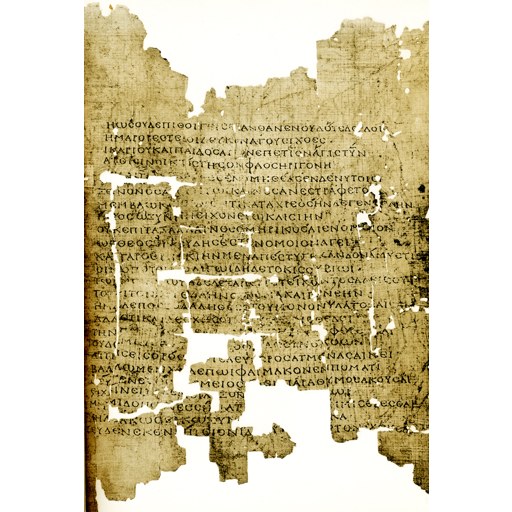
The Egypt Exploration Society
License: Public domain
Callimachus
Saint- Life Span
- b. 362
- Gender
- male
- Church
- Catholic
Places
Canonization
Biography
Callimachus was a Greek poet, scholar, and critic of the Hellenistic age, born in the Greek city of Cyrene in Cyrenaica, on the North African coast in what is now Libya. Ancient biographical notices, preserved chiefly in the Suda lexicon, name his father Battus and his mother Mesatma (or Mesatme) and associate the family with the old Battiad aristocracy of Cyrene. He belongs to the generation that came of age after the death of Alexander the Great, when Greek literary culture expanded across the eastern Mediterranean under the successor kingdoms. Later tradition places part of his education in Athens, a common path for ambitious Greeks of the period, before he settled at Alexandria in Egypt, capital of the Ptolemaic kings and site of the Mouseion and the Great Library. Precise years of birth and death are not recorded in surviving ancient sources.
Under the patronage of Ptolemy II Philadelphus and Ptolemy III Euergetes, Callimachus became one of the central intellectual figures of third-century BC Alexandria. His most important scholarly work was the Pinakes, a bio-bibliographical catalogue of the Library’s holdings in 120 books, classifying Greek authors by genre, listing their writings, and supplying brief lives. The Pinakes itself is lost, but it remained a fundamental reference for later antiquity. He also composed numerous prose treatises of an antiquarian and miscellaneous character, on topics ranging from contests, winds, and the foundations of cities and islands to wonders of the world and grammatical questions. Whether he ever held the official post of chief librarian is uncertain; the securely attested holders of that office in his time are Zenodotus, Apollonius of Rhodes, and Eratosthenes, and Callimachus’s role is better described as that of a leading scholar and cataloguer. Anecdotes of a literary quarrel with Apollonius over the proper scale and style of epic circulated in later antiquity, but their historical basis is difficult to confirm.
Callimachus’s poetry put into practice the principles of refinement, erudition, and originality within relatively compact forms. The Aetia, an elegiac poem in four books, collected aetiological narratives explaining the origins of rites, festivals, and names; papyrus finds have recovered substantial fragments, including a prologue in which the poet rejects long continuous epic in favor of a slender, artfully varied Muse. The Hecale was a short epic on Theseus’s stay with the poor woman Hecale. Six Hymns survive complete in the medieval manuscript tradition, addressed to Zeus, Apollo, Artemis, Delos, Athena, and Demeter, blending traditional hymnic language with Ptolemaic panegyric and scholarly allusion. The Iambi adapted archaic iambic meters and satirical spirit, and many epigrams entered the Greek Anthology. Ancient estimates credited him with as many as eight hundred books; only a small fraction survives.
His influence on later Greek and especially Roman poetry was profound. Latin poets of the first century BC and the Augustan age, including Catullus, Virgil, Propertius, and Ovid, treated him as a model of learned brevity and aetiological technique. Catullus translated the Lock of Berenice episode from Aetia Book 4. In late antiquity and the Byzantine period his hymns and fragments continued to be read as school texts and sources of mythological learning. No reliable ancient evidence documents a spouse or children, and nothing indicates that he belonged to any monastic or later Christian religious order. He composed hymns to the traditional Greek gods and lived within the pagan intellectual world of the Ptolemaic court.
Callimachus is not recorded as a Christian saint, bishop, pope, or patriarch, and he has no feast day or recognized patronages in Christian tradition. He is generally thought to have died at Alexandria during the reign of Ptolemy III, in the mid-third century BC, but no contemporary source states the place or year of death with precision. His surviving poems, the ancient testimonia, and the papyrus fragments recovered in Egypt remain among the principal sources for Hellenistic literary culture.