Caprasius of Lérins is a saint of the Catholic Church (d. 430). Caprasius of Lérins's feast day is celebrated on June 1.
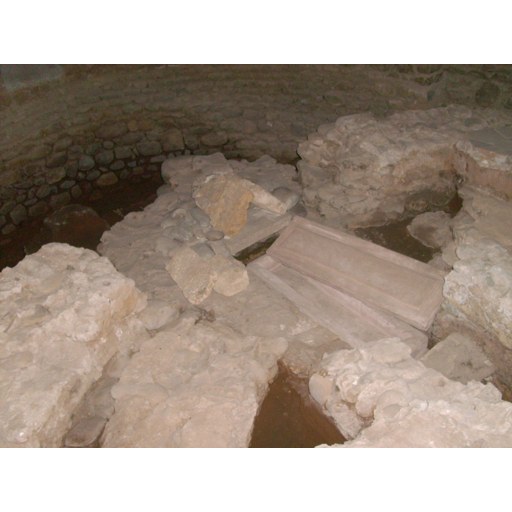
Davide Papalini
License: CC BY 2.5
Caprasius of Lérins
Saint- Life Span
- d. 430
- Feast Day
- June 1
- Gender
- male
- Church
- Catholic
Places
Roles & Family
Biography
Caprasius of Lérins, known in French as Caprais, was a Christian hermit and monastic elder in Gaul in the late fourth and early fifth centuries. He is remembered chiefly as the spiritual guide of Honoratus of Arles and as one of the founding figures of the monastery on the island of Lérins, off the Mediterranean coast of Provence. Almost nothing can be established about his birth, family, or education. The earliest substantial witness is the sermon on the life of Honoratus composed by Hilary of Arles, Honoratus’s kinsman and successor in the see of Arles, shortly after Honoratus’s death in 429. Hilary, himself formed at Lérins, presents Caprasius as a man already regarded as a man of God when the young aristocrat Honoratus and Honoratus’s brother Venantius placed themselves under his direction.
According to that account, Honoratus belonged to a consular family of Belgic Gaul and had turned from a secular career to ascetic Christianity. With Venantius he took Caprasius as companion and guide, and the three left Gaul in search of a stricter monastic life in the East. They traveled in Greece. During the journey Venantius died at Methone in the Peloponnese. Caprasius and Honoratus then returned to the West. After their return they lived for a time as hermits in the country around Fréjus (ancient Forum Iulii) in Provence, with the support of Bishop Leontius of Fréjus. From that base Honoratus occupied one of the Lérins islands, described by contemporaries as previously deserted. There he gathered a community of monks. Caprasius settled on the island as an elder of the community. Later martyrologies sometimes call him abbot, a title that may reflect later institutional language more than a fifth-century office.
The monastery of Lérins quickly became one of the principal centers of monastic culture in fifth-century Gaul. Among those associated with the island in that generation were Eucherius, later bishop of Lyon, and Hilary of Arles; in the following generation the community formed writers such as Vincent of Lérins and Salvian. Caprasius’s role in this milieu was that of a spiritual father rather than that of a legislator or administrator. When Honoratus was taken from the island to become bishop of Arles, around 426 to 428, Caprasius remained at Lérins. Traditional notices place his death in 430. He was venerated locally from an early date. The Roman Martyrology commemorates him on 1 June as a holy abbot on the island of Lérins. He is distinct from Caprasius of Agen, a martyr of the third century whose feast is 20 October.
Because Caprasius left no writings and because later medieval accounts tend to embroider the early Lérins tradition, the historian is largely confined to Hilary’s portrait and to the liturgical memory of the Church. That portrait depicts a discreet, experienced ascetic who accompanied younger nobles into the monastic life, shared their unsuccessful attempt to settle in the East, and helped plant a durable community on a Provençal island that influenced Gallic Christianity for generations. His cult remained essentially local. No reliable record survives of a formal papal canonization, of a precise burial site beyond the island monastery, or of particular patronages attached to his name.