Carl Cho Shin-ch'ŏl is a saint of the Catholic Church.
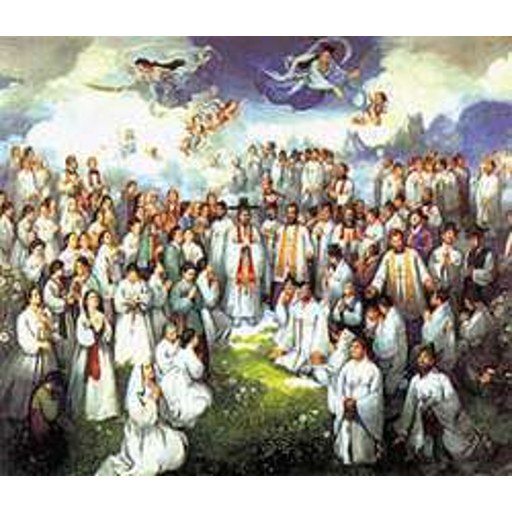
https://www.catholic.org/saints/saint.php?saint_id=7118
License: unknown
Carl Cho Shin-ch'ŏl
Saint- Gender
- male
- Church
- Catholic
Places
Roles & Family
Biography
Carl Cho Shin-ch'ŏl (Charles Cho Shin-chol in some transliterations) bears a name typical of Korean Catholics who received a Western baptismal name together with a Korean family name and given name. Cho (조) is a common Korean surname; the pairing of such a surname with a Christian name such as Carl or Charles is well attested among Korean Catholics from the late eighteenth century onward. Beyond the name itself, however, standard English-language historical, biographical, and hagiographical works do not yield a clearly identifiable individual matching this exact form. Precise dates of birth and death, places of origin or death, family circumstances, and ecclesiastical status therefore cannot be stated from verified sources.
Catholicism took root in Korea in a distinctive manner. In 1784 Yi Sŭng-hun, traveling with a Korean tribute embassy to Beijing, was baptized there and returned to gather a community of lay believers who studied Christian books and practiced the faith for some years without resident clergy. The Church grew among both yangban scholars and commoners, but it soon met the hostility of the Joseon state, which regarded the new religion as subversive of Confucian ritual, ancestral rites, and royal authority. Major persecutions followed in 1801, 1839, 1846, and 1866, producing hundreds of martyrs whose causes were later examined in Rome. Members of the Cho clan appear among both the 103 Martyrs of Korea canonized in 1984 and the larger group of Korean martyrs beatified in 2014, yet matching a specific baptismal name and Korean given name requires Korean-character sources and the official lists; no such secure match for Carl Cho Shin-ch'ŏl is available here.
If this person belonged to the persecuted generations of the nineteenth century, his life would have been lived under the threat of denunciation, imprisonment, torture, and execution. Lay Catholics often formed secret associations, memorized prayers and doctrine, and, after the first priests of the Paris Foreign Missions Society arrived, sheltered missionaries. Some Cho family members in the martyr records were married and had children; others lived as celibate catechists or, later, entered the clerical state. Without a verified identification it is impossible to say which of these paths, if any, he followed, or whether he survived into the period of legal tolerance that began in the 1880s and 1890s.
The later history of the Korean Catholic Church—from the establishment of a hierarchy, the growth of a native clergy, and the twentieth-century experience of occupation, war, and national division—produced many priests, religious, and lay leaders. A figure named Cho Shin-ch'ŏl could in principle belong to that later period as well. In the absence of corroborating evidence from diocesan archives, necrologies, or standard biographical dictionaries, this notice must remain limited to onomastic and contextual observations. A fuller account would require Korean Catholic historical institutes, diocesan archives, and any documentation submitted for a beatification or canonization process that might include this name.