Carla Ronci is a venerable of the Catholic Church (1936 - 1970).
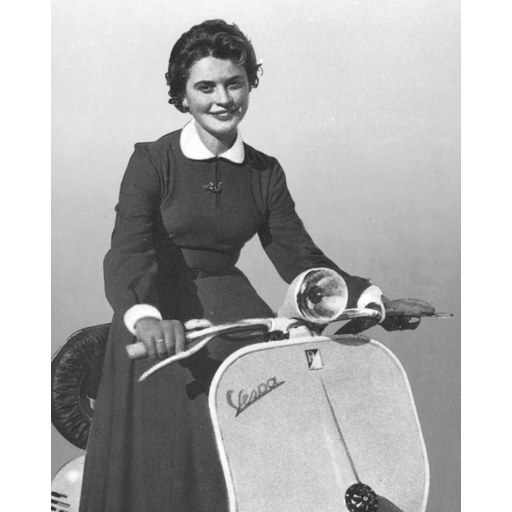
Unknown authorUnknown author
License: Public domain
Carla Ronci
Venerable- Life Span
- 1936 - 1970 (age 34)
- Gender
- female
- Church
- Catholic
Places
Relics & Where to Venerate
Location unknown
The bodily remains of Carla Ronci are a first-class relic. Venerated at Q124942705.
Roles & Family
Religious Information
Biography
Carla Ronci was born on 11 April 1936 in Torre Pedrera, a seaside hamlet of Rimini on the Adriatic coast of Emilia-Romagna, Italy. She grew up in a modest Catholic family through the last years of Fascist Italy and the Second World War. From childhood she took part in parish life and showed a strong attraction to prayer and to practical service. After elementary schooling she trained as a dressmaker and worked as a seamstress, helping to support her household. At the same time she became active in Catholic Action, teaching catechism and assisting with youth groups in her parish.
She desired a complete consecration to God and sought admission to several religious congregations, including contemplative communities. Recurring health problems led to her being refused. In the late 1950s she found a path of consecration in ordinary lay circumstances by joining the Secular Institute of the Missionaries of the Kingship of Christ, a community of Franciscan inspiration founded in the early twentieth century by the Franciscan friar Agostino Gemelli and the laywoman Armida Barelli. Members profess the evangelical counsels while remaining in their families and workplaces. Ronci continued to live at home, to earn her living by sewing, and to devote her free time to catechesis and personal accompaniment, especially among girls and young women of the Rimini area.
Her interior life is known mainly from a spiritual diary and an extensive correspondence later published in Italian. Those writings describe a hidden offering of daily work and illness, devotion to the Eucharist and to the Passion of Christ, and trust in providence. People who knew her remembered her as cheerful, practical, and generous rather than as a public figure. In her final years a grave illness, identified in biographical accounts as leukemia, advanced rapidly. She accepted the suffering as a share in the Cross and, as long as strength remained, continued to write and to encourage others.
She died in Rimini on 2 April 1970, a few days before her thirty-fourth birthday. Local devotion arose quickly in her native district. The Diocese of Rimini opened the diocesan inquiry into her life and virtues in 1987, and she received the title Servant of God. The cause has not proceeded to beatification or canonization. She is remembered in the Rimini church as an example of twentieth-century lay consecration and of catechetical zeal within a secular institute.