Caroline Carré de Malberg is a venerable of the Catholic Church (1829 - 1891).
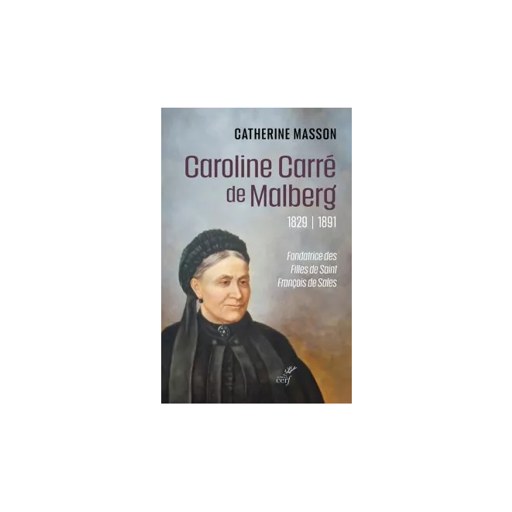
https://livresenfamille.fr/biographies-temoins-saints/25971-caroline-carre-de-malberg-1829-1891-fondatrice-des-filles-de-saint-francois-de-sales.html
License: unknown
Caroline Carré de Malberg
Venerable- Life Span
- 1829 - 1891 (age 62)
- Gender
- female
- Church
- Catholic
Places
Roles & Family
Religious Information
Biography
Caroline-Barbe Colchen was born on 8 April 1829 in Metz, in the Moselle region of northeastern France, into a Catholic family of the professional class; her father served as a magistrate. She received a careful Christian education in the religious climate of Restoration and July-Monarchy Lorraine. Later biographical tradition, based on her correspondence and on the memories of the association she helped to found, holds that she felt an early attraction to prayer and even to consecrated life, but she did not enter a convent. In keeping with the expectations placed upon a young woman of her station, she prepared instead for marriage.
In 1849 she married Paul Carré de Malberg, a career officer in the French army. The couple had children, and Caroline assumed the principal responsibility for their Christian upbringing. The marriage was a severe and prolonged trial. Her husband was frequently absent with his regiment; sources drawing on her own papers describe him as worldly, remote from religious practice, and unfaithful. She did not abandon her state of life. She sought instead to sanctify the ordinary duties of a military wife and mother, accepting suffering as a path of fidelity rather than as a reason to withdraw from family obligations. The Franco-Prussian War of 1870–1871 and the German annexation of Alsace-Lorraine, which included Metz and the nearby commune of Lorry-lès-Metz where she made her home, added political and cultural dislocation to these domestic difficulties. She remained in annexed Lorraine while keeping ties to Catholic circles in France, especially in Paris.
In Paris she came under the spiritual direction of the priest Henri Chaumont. Together, in the spirit of Saint Francis de Sales—who taught that holiness is possible in every vocation and that gentleness, humility, and fidelity to present duty are the ordinary way to God—they established in 1872 the Society of the Daughters of Saint Francis de Sales (Société des Filles de Saint-François de Sales). The society was intended for women who would remain in their families and social duties rather than enter religion in the canonical sense. It offered a rule of life, mutual support, and an apostolic outlook adapted to the laity, and it belonged to a wider cluster of Salesian foundations associated with Chaumont, which also included societies for priests and for men. Caroline Carré de Malberg was the foundress and first guide of the women’s group, giving it a practical, domestic, and Eucharistic character. She is therefore remembered not as a nun but as a married laywoman and as a pioneer of organized lay spirituality in nineteenth-century French Catholicism.
She died on 28 January 1891 at Lorry-lès-Metz. A reputation for holiness persisted among the Daughters of Saint Francis de Sales and in the diocese of Metz, and a cause of beatification was later introduced. Pope John Paul II recognized the heroic character of her virtues and granted her the title of Venerable. She has not been beatified or canonized, and she has no universally established feast day or official patronages in the liturgical books of the Catholic Church. Her historical importance rests on the model she offered of sanctity within a difficult marriage and on the durable Salesian association for women in ordinary life that she helped to found.