Castulus is a saint of the Catholic Church (d. 286). Castulus's feast day is celebrated on 26 March. Castulus is the patron saint of shepherds;Moosburg an der Isar;against lightning;against fire;against drowning;against diseases of horses;against blood poisoning.
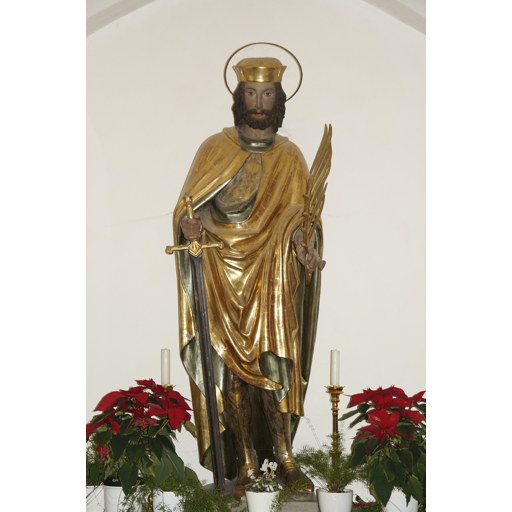
selbst fotografiert
License: Public domain
Castulus
Saint- Life Span
- d. 286
- Feast Day
- 26 March
- Gender
- male
- Church
- Catholic
Places
Roles & Family
Religious Information
Patronage
shepherds;Moosburg an der Isar;against lightning;against fire;against drowning;against diseases of horses;against blood poisoning
Biography
Saint Castulus (also known as Kastulus) is a Christian martyr of the later third century, venerated especially in Rome and in Bavaria. Almost nothing about his birth, parentage, or early life can be established from contemporary records. Later hagiographical tradition, drawing chiefly on the legendary Acts associated with Saint Sebastian and on medieval martyrologies, presents him as chamberlain (cubicularius) at the court of the emperor Diocletian in Rome. In that capacity he would have had close access to the imperial household on the Palatine. The same tradition holds that he became a Christian and thereafter used his house and his office to protect fellow believers during a period of intermittent persecution. Historians treat these biographical particulars with caution, because they rest on late narrative sources rather than on inscriptions or documents of the third century; the antiquity of his cult in Rome is, however, not in doubt.
According to the legend, Castulus sheltered Christians in his residence and arranged for clergy to baptize converts from the court and the city. He is linked in this cycle of stories with other Roman martyrs of the Sebastian group, including the tribune Tiburtius. His wife, venerated as Saint Irene, appears in the same literature as the woman who recovered and cared for the body of Saint Sebastian after he had been left for dead following an attempted execution. Castulus is said to have been betrayed by a false brother named Torquatus, arrested, and tortured, including by being suspended by the hands. He was then taken outside the city to a sand pit or quarry along the Via Labicana and buried alive. The year commonly assigned to his death is 286, early in Diocletian’s reign and well before the opening of the Great Persecution in 303; that date is traditional rather than independently confirmed. He was buried in the cemetery on the Via Labicana that later bore his name, the Catacomb of Castulus.
The cult of Castulus remained local to Rome for some centuries and then spread north of the Alps. In the early ninth century, relics attributed to him were translated to Moosburg an der Isar in Bavaria, where a collegiate church dedicated to Saint Castulus became the principal centre of his veneration. Portions of the relics were later transferred to Landshut. He is entered in the Roman Martyrology on 26 March, which remains his feast day in the Catholic Church. Because the written life depends on legendary passion literature, the secure historical minimum is that a martyr named Castulus was honoured at a cemetery on the Via Labicana and that his cult was lively enough by the Carolingian period to support a major translation of relics into Bavaria.
In popular devotion, especially in German-speaking regions, Castulus has been invoked as patron of shepherds and as a protector against lightning, fire, drowning, diseases of horses, and blood poisoning. He is the patron saint of Moosburg an der Isar. No religious order, papal or patriarchal office, or record of children is attached to him in the sources; he is remembered as a married lay court official and martyr of Rome.