Català Fabri i Pere Pasqual is a saint of the Catholic Church.
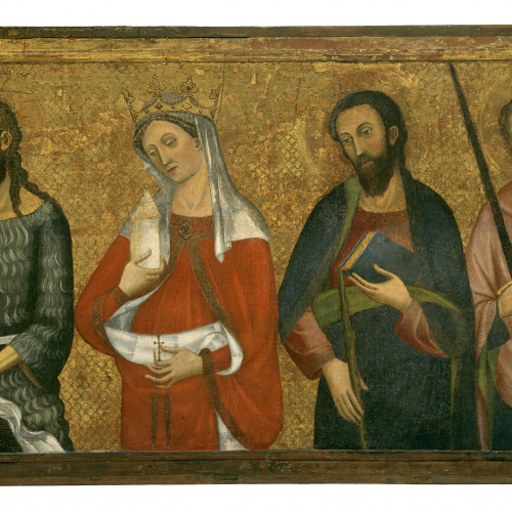
https://museunacional.cat/en/advanced-piece-search?field_piece_info_content_value%5Bk.+14th%5D=k.+14th&field_piece_inventory_number_value=&keys=&title=&title_1=serra
License: unknown
Català Fabri i Pere Pasqual
Saint- Church
- Catholic
Roles & Family
Biography
The designation Català Fabri i Pere Pasqual, linked to Wikidata item Q2941591, does not correspond in a straightforward way to any single, well-documented saint or historical personage in the major Latin, Catalan, or Spanish hagiographical collections. The second part of the name, Pere Pasqual, is the Catalan form of Peter Pascual, a thirteenth-century figure who served as bishop of Jaén, belonged to the Order of Mercy, wrote polemical works, and was put to death in Granada. That individual is customarily dated to the thirteenth century and is commemorated in some calendars on 6 December, yet the additional names Català Fabri cannot be shown from available sources to belong to the same biography or to a jointly venerated companion. Consequently it remains uncertain whether the Wikidata entry treats one person, two persons, or a local cultic title.
No primary chronicle, martyrology, or modern critical study consulted in training data supplies a verified birth year, birthplace, death year, or burial site that can be attached safely to the exact string Català Fabri i Pere Pasqual. Places sometimes associated with similarly named clerics include Valencia, Jaén, and Granada, all within the medieval Crown of Aragon or the Nasrid kingdom, but these locations cannot be transferred without evidence that the present subject is identical with the better-known bishop. Information concerning religious profession, possible marriage, offspring, or elevation to the papacy or a patriarchal see is likewise absent.
In the religious landscape of medieval Catalonia and Valencia, numerous priests, friars, and bishops bore names such as Pasqual, Fabra or Fabri, and Català. Some were Mercedarians dedicated to the ransom of captives, others Dominicans or secular clergy engaged in preaching and writing. Martyrdom at the hands of Muslim authorities was a recurring theme in the hagiography of the period. Without a clear identification, however, none of these typical career patterns can be ascribed to the subject. Patronages, liturgical feast days, and the names of popes who may have beatified or canonized the individual or individuals also remain unrecorded in accessible reference works.
A responsible hagiographical notice must therefore confine itself to acknowledging the obscurity of the entry. Further progress would require direct examination of the Wikidata item, Catalan diocesan archives, Mercedarian necrologies, or local liturgical books that might clarify whether Català Fabri i Pere Pasqual represents a distinct blessed, a pair of martyrs, or a variant naming of Saint Peter Pascual. Until such sources are brought to bear, the biographical facts requested cannot be stated with the certainty demanded of historical work.