Celestine V is a saint of the Catholic Church (1215 - 1296). Celestine V's feast day is celebrated on 19 May. Celestine V is the patron saint of L'Aquila;bookbinders.
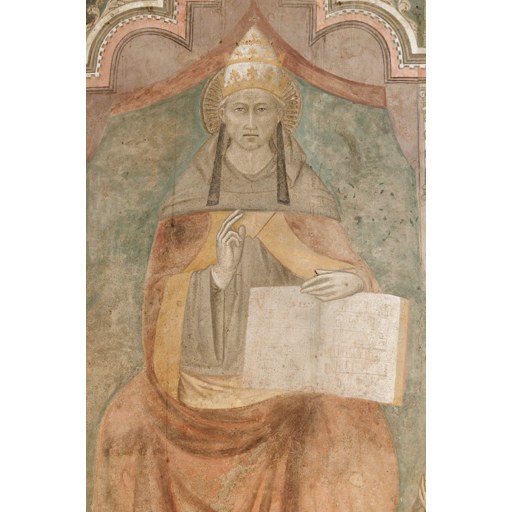
Niccolò di Tommaso
License: Public domain
Celestine V
Saint- Life Span
- 1215 - 1296 (age 81)
- Feast Day
- 19 May
- Gender
- male
- Church
- Catholic
Places
Relics & Where to Venerate
Location unknown
The bodily remains of Celestine V are a first-class relic. Venerated at Basilica of St. Mary of Collemaggio.
Roles & Family
Religious Information
Patronage
L'Aquila;bookbinders
Canonization
Biography
Pietro Angelerio, known in religion as Pietro da Morrone and later as Pope Celestine V, was born in 1215 at Sant'Angelo Limosano in the Kingdom of Sicily, in the mountainous region of Molise. He came from a poor rural family and, according to traditional accounts, was one of many children. He entered Benedictine life as a young man at the monastery of Santa Maria in Faifoli, in the diocese of Benevento. Seeking a stricter solitude than conventual monasticism afforded, he withdrew to a hermitage on Mount Morrone in the Abruzzi, from which his familiar name derived, and later spent periods in the Maiella range. There his extreme austerity, prolonged fasting, and growing reputation for holiness and miracles drew disciples. In the mid-thirteenth century he organized these followers into a community of hermits living under the Rule of Saint Benedict. The congregation, later called the Celestines, received papal approval during the 1260s and established numerous houses in the Kingdom of Sicily and neighboring territories. Pietro himself repeatedly fled the administration of the order in order to return to solitude, a pattern that foreshadowed his later conduct as pope.
After the death of Pope Nicholas IV in April 1292, the College of Cardinals remained deadlocked for more than two years, divided by rival Roman families and by Angevin and other political interests. In July 1294 the cardinals, then assembled at Perugia, elected the aged hermit to the papacy. Contemporary reports hold that a letter from Pietro warning them of divine judgment if they left the Church without a head helped break the impasse; the choice also reflected exhaustion, popular fame for sanctity, and the hope that a non-cardinal outsider might stand above factions. He took the name Celestine V. Reluctant to leave his mountain hermitage, he was persuaded to accept and travelled south. He was consecrated and crowned at L'Aquila in the church of Santa Maria di Collemaggio, which he had founded. During a pontificate of only about five months he resided largely in the Angevin kingdom of Naples and fell under the influence of King Charles II. He created a substantial number of cardinals favorable to Angevin and French interests, confirmed in a constitution the right of a pope to resign, granted protection to groups of Franciscan Spirituals, and issued the bull that established the Perdonanza Celestiniana, a plenary indulgence attached to Collemaggio that continues to be celebrated at L'Aquila.
Untrained in curial administration, advanced in age, and overwhelmed by the burdens of office and by competing factions, Celestine concluded that he could not fulfill the papal ministry. On 13 December 1294, at Naples, he read a solemn act of resignation, citing his own inadequacy, the desire to save his soul, and the need to return to eremitical life. The decree he had already issued on the liceity of papal abdication was intended to remove canonical doubt. The cardinals accepted the resignation. Ten days later Benedetto Caetani was elected and took the name Boniface VIII. Fearing that the former pope might become a rallying point for opponents or even the pretext for an antipope, Boniface ordered that Celestine be kept under control. When Celestine attempted to resume a hermit's life, and according to some accounts to flee by sea, he was captured and confined in the fortress of Fumone in Campagna, in the Papal States. He died there on 19 May 1296. Later sources, some of them hostile to Boniface, alleged harsh conditions of imprisonment; the exact circumstances of his death remain a matter of historical discussion rather than settled proof of murder.
Celestine was first buried at Ferentino. His remains were later translated to the basilica of Santa Maria di Collemaggio in L'Aquila, where they have remained a focus of local and order-wide veneration. Pope Clement V canonized him on 5 May 1313 at Avignon, a decision that reflected an existing cult and also the politics of the early Avignon papacy and the French crown's campaign to discredit Boniface VIII. In the Divine Comedy, Dante Alighieri placed among the neutrals in Hell the man who made 'the great refusal,' a literary judgment that long colored Celestine's reputation even as the Latin Church honored him as a saint of humility, contemplative poverty, and eremitical vocation. His feast is observed on 19 May. He is venerated as a patron of L'Aquila and appears in traditional lists as a patron of bookbinders.