Centola of Burgos is a saint of the Catholic Church. Centola of Burgos's feast day is celebrated on 13 August.
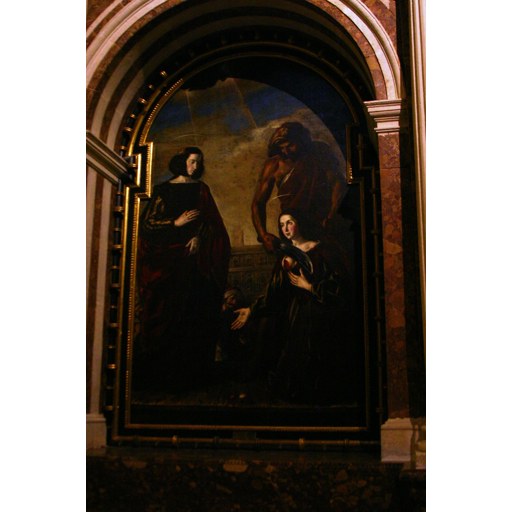
José Luiz
License: CC BY-SA 3.0
Centola of Burgos
Saint- Feast Day
- 13 August
- Gender
- female
- Church
- Catholic
Places
Roles & Family
Biography
Centola of Burgos, known in Spanish as Santa Centola or Santa Centolla, is a Christian martyr of late antiquity whose cult is centered in the province of Burgos in Castile, in northern Spain. She is almost invariably venerated together with Saint Helen (Santa Elena). Virtually nothing about her life can be established from contemporary historical documents. The surviving notices belong to local tradition and to later medieval and early modern hagiography, which present her as a virgin martyr of the Roman period in Hispania. She held no papal or patriarchal office and is not recorded as a member of any religious order.
According to the traditional account current in the Burgos region, Centola and Helen were Christian women who suffered death for their faith during a time of persecution, customarily placed in the early fourth century and associated with imperial measures against Christians in the later Roman Empire. They are said to have refused to sacrifice to the gods of Rome. After interrogation and torture they were executed, typically described as by beheading. Local memory locates their martyrdom in or near Siero, in what is now the province of Burgos. No independent, datable passio from late antiquity survives, and the narrative follows patterns common to many Hispanic virgin-martyr legends. Precise years of birth and death are not attested by reliable historical evidence.
Devotion to the two saints took visible form in a church dedicated to Saints Centola and Helen at Siero. The present building, a Romanesque church of the twelfth century, became the principal focus of their cult and the traditional resting place of their relics. Their feast has been observed on 13 August in the local calendar of the Archdiocese of Burgos. The cult remained essentially regional; Centola does not appear to have been widely entered in the general Roman Martyrology in a manner that made her well known outside Castile.
As a figure of popular sanctity rather than of well-documented biography, Centola illustrates the character of many early Spanish martyrs whose names and feast days were preserved by local churches while the details of their lives receded into legend. There is no reliable evidence of a spouse or children; she is remembered in the tradition as a lay Christian woman and virgin who died for the faith. Later centuries continued to honor her in the rural communities of Burgos, where the church at Siero and associated hermitages kept her memory alive in liturgy and local custom. Formal papal canonization or beatification in the modern sense is not recorded; veneration rests on ancient local cult.