Cetteus is a saint of the Catholic Church (d. 597). Cetteus's feast day is celebrated on 13 June. Cetteus is the patron saint of Pescara.
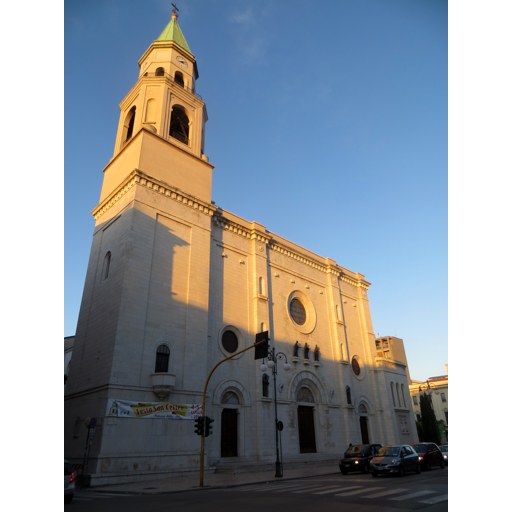
Luca Aless
License: CC BY-SA 4.0
Cetteus
Saint- Life Span
- d. 597
- Feast Day
- 13 June
- Gender
- male
- Church
- Catholic
Places
Sacred Place

Roles & Family
Patronage
Pescara
Biography
Cetteus, also known as Ceteus, Cetus, or Cetheus and in Italian as San Ceteo or San Cetteo, was bishop of Amiternum, an ancient Sabine city in the Abruzzo of central Italy, near present-day L'Aquila. He belongs to the late sixth century. No contemporary chronicle or papal letter preserves a trustworthy account of his birth, parentage, or formation, and no year of birth can be established. What is known of him depends on later hagiography and on the cult that took root at Pescara on the Adriatic coast, rather than on documents from his own lifetime.
His episcopate fell in the decades after the Lombard entry into Italy in 568, when inland towns of the Abruzzo lay between Lombard duchies and the remaining imperial and papal sphere. Tradition holds that two Lombard captains, named in the legend Alai and Umbolus, occupied Amiternum. The Lombards were then widely Arian in confession. The received story presents Cetteus as the Catholic bishop of the city who would not yield to them. He is said to have been led to a bridge over the river Aterno, weighted with a millstone, and thrown into the stream. Later sources assign this death to 13 June 597, during the pontificate of Pope Gregory the Great. The precise year is traditional rather than independently documented in a dated sixth-century record.
The same legend relates that the body did not remain at Amiternum but was borne by the Aterno, which becomes the Pescara River, down to the Adriatic. It was recovered at the ancient mouth-port of Aternum, on the site of present-day Pescara, and buried there. This river-journey motif, common in the legends of drowned martyrs, became the foundation of Pescara’s claim to the saint. A church in his honor arose in the city; the present Cathedral of San Cetteo is the seat of his cult and, according to local tradition, the resting place of his relics. Pescara regards him as its principal patron.
Cetteus was not canonized by a formal papal process of the kind used in later centuries. His sainthood rests on ancient local veneration and on the liturgical calendars of the region, a pattern typical of early Italian bishop-martyrs. His feast is observed on 13 June. Outside Pescara and the former territory of Amiternum he remains little known. Historians treat the named Lombard captains, the millstone, and the exact year with caution, while recognizing that a bishop of Amiternum remembered as Cetteus, or a closely similar name, was venerated as a martyr in that part of Italy at the end of the sixth century. The dedication of Pescara’s cathedral is the chief enduring witness to his cult.