Charles Borromeo is a saint of the Catholic Church (1538 - 1584). Charles Borromeo's feast day is celebrated on 4 November. Charles Borromeo is the patron saint of bishops;catechists;seminarians;spiritual directors;cardinals;ulcers;stomach diseases;colic;apple orchards;starch makers;Milan;Lombardy;Monterey, California.
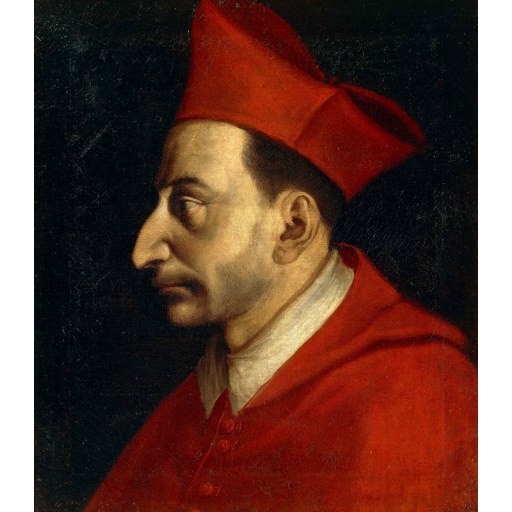
Giovanni Ambrogio Figino
License: Public domain
Charles Borromeo
Saint- Life Span
- 1538 - 1584 (age 46)
- Feast Day
- 4 November
- Gender
- male
- Church
- Catholic
Places


Relics & Where to Venerate
Location unknown
The bodily remains of Charles Borromeo are a first-class relic. Venerated at Milan Cathedral.
Housed at Milan Cathedral · Italy
The relics of St. Charles Borromeo are enshrined in a crypt beneath the high altar of Milan Cathedral.
Roles & Family
Patronage
bishops;catechists;seminarians;spiritual directors;cardinals;ulcers;stomach diseases;colic;apple orchards;starch makers;Milan;Lombardy;Monterey, California
Canonization
Biography
Charles Borromeo was born on 2 October 1538 at the castle of Arona on Lake Maggiore in the Duchy of Milan. He was the second son of Count Giberto Borromeo and Margherita de' Medici, whose brother Giovanni Angelo de' Medici later reigned as Pope Pius IV. The Borromeo family ranked among the leading nobility of northern Italy. Destined for the Church, he received ecclesiastical benefices while still a child, including the abbey of Saints Gratinian and Felinus at Arona. He studied at Milan and then civil and canon law at the University of Pavia, receiving his doctorate in 1559.
Upon his uncle's election as pope in 1559, Borromeo was summoned to Rome. In 1560, at the age of twenty-one, he was created a cardinal and appointed administrator of the Archdiocese of Milan as well as papal secretary of state. He became a central figure in the Roman Curia and worked to bring about the reconvening of the Council of Trent. During the council's final period in 1562 and 1563 he served as a principal organizer of the papal program of reform. He was ordained to the priesthood in 1563 and consecrated a bishop the same year. After the death of Pius IV in 1565 he left Rome to take up personal residence in Milan, a see that had long lacked a resident archbishop.
In Milan he devoted himself to implementing the decrees of Trent. He convened provincial councils and diocesan synods, founded seminaries for the education of clergy, reformed religious communities, and established the Confraternity of Christian Doctrine to provide systematic religious instruction. He insisted on the residence of pastors, visited the remote Alpine valleys of his large diocese, and lived a life of marked personal austerity, distributing much of his wealth to the poor. His reforms met resistance from some civil officials and from certain clergy and religious, yet he persisted in the work of restoration. He also founded the Oblates of St. Ambrose, a congregation of secular priests living in community.
When plague struck Milan in 1576, Borromeo remained in the city, organized care for the afflicted, and used his resources to relieve the starving. Years of labor, travel, and severe penance undermined his health. He died in Milan on 3 November 1584 at the age of forty-six and was buried in the cathedral. He was beatified by Pope Clement VIII in 1602 and canonized by Pope Paul V in 1610. Charles Borromeo became one of the most influential models of the reforming bishop of the Catholic Reformation, and his cult spread widely in the centuries that followed.