Charles I of Austria is a blessed of the Catholic Church (1887 - 1922). Charles I of Austria's feast day is celebrated on 21 October.
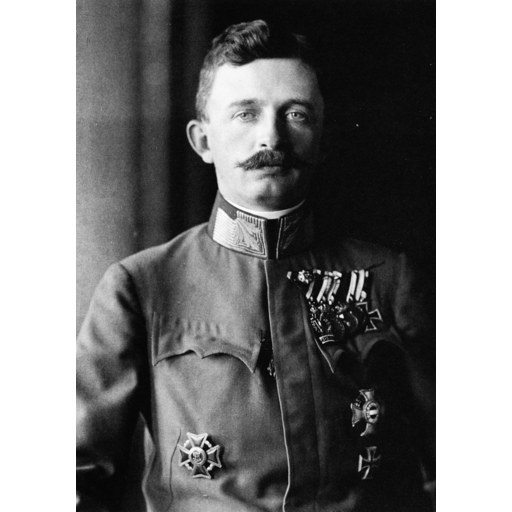
Wenzl Weis
License: Public domain
Charles I of Austria
Blessed- Life Span
- 1887 - 1922 (age 35)
- Feast Day
- 21 October
- Gender
- male
- Church
- Catholic
Places
Relics & Where to Venerate
Location unknown
The bodily remains of Charles I of Austria are a first-class relic. Venerated at Igreja de Nossa Senhora do Monte.
Roles & Family
Religious Information
Canonization
Biography
Charles I of Austria, born Karl Franz Joseph Ludwig Hubert Georg Otto Maria on 17 August 1887 at Persenbeug Castle in Lower Austria, was the last Emperor of Austria, the last King of Hungary (as Charles IV), and the last Habsburg-Lorraine sovereign of the Dual Monarchy. He was the eldest son of Archduke Otto Franz of Austria and Princess Maria Josepha of Saxony, and a grandnephew of Emperor Franz Joseph I. After the deaths that reshaped the Habsburg succession in the late nineteenth century, and especially after the assassination of Archduke Franz Ferdinand at Sarajevo in 1914, Charles became heir presumptive. He received a military education, served with the army, and was already noted for a serious and conventional Catholic piety that would later shape both his public image and his cause for beatification.
On 21 October 1911 he married Princess Zita of Bourbon-Parma at Schwarzau. The marriage produced eight children, the eldest of whom was Otto von Habsburg. Charles succeeded Franz Joseph I on 21 November 1916, in the midst of the First World War. As emperor-king he sought to extricate Austria-Hungary from the conflict, secretly authorizing the 1917 peace feelers known as the Sixtus Affair through his brother-in-law Prince Sixtus of Bourbon-Parma, and in October 1918 issuing the so-called People's Manifesto in a late attempt to federalize the remaining Austrian lands. These efforts failed amid military collapse and the rise of nationalist councils. On 11 November 1918 he issued a proclamation withdrawing from participation in the administration of the Austrian state, with a similar declaration regarding Hungary two days later; he never executed a formal instrument of abdication.
After a short residence at Eckartsau, Charles and his family went into Swiss exile in March 1919. In 1921 he made two unsuccessful attempts to recover the Hungarian crown, entering Hungary in March and again in October. The second attempt ended with his internment and removal by the Allied powers. He was deported to the Portuguese island of Madeira and lived in reduced circumstances at Quinta do Monte near Funchal. There he contracted a severe respiratory illness and died of pneumonia on 1 April 1922, aged thirty-four. He was buried in the Church of Nossa Senhora do Monte in Funchal; his body has remained on Madeira rather than being transferred to the Imperial Crypt in Vienna.
A devout Catholic who presented himself as a Christian monarch seeking peace and social order, Charles became the subject of a cause for canonization. Pope John Paul II beatified him on 3 October 2004, emphasizing his efforts for peace and his example as husband and father. He is venerated in the Catholic Church as Blessed Charles of Austria, with a liturgical memorial on 21 October, the anniversary of his marriage. He has not been canonized.