Charles of Sezze is a saint of the Catholic Church (1613 - 1670). Charles of Sezze's feast day is celebrated on 6 January.
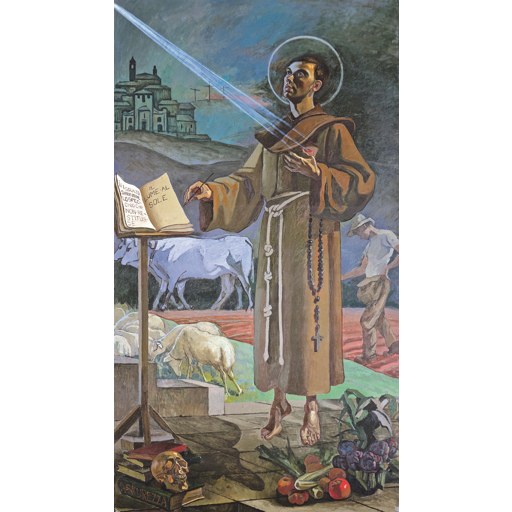
Antonio Sicurezza
License: Public domain
Charles of Sezze
Saint- Life Span
- 1613 - 1670 (age 57)
- Feast Day
- 6 January
- Gender
- male
- Church
- Catholic
Places
Relics & Where to Venerate
Location unknown
The bodily remains of Charles of Sezze are a first-class relic. Venerated at San Francesco a Ripa.
Roles & Family
Religious Information
Canonization
Biography
Charles of Sezze was born Giancarlo Marchioni in 1613 at Sezze, a hill town in Lazio then belonging to the Papal States. He came from a poor farming family. His parents hoped he would be educated for the priesthood, which would have raised the household's standing, but he showed little aptitude for the Latin studies required for ordination and spent his youth in field labor. Drawn to evangelical poverty rather than clerical rank, and after family opposition, he was received in 1635 as a lay brother of the Order of Friars Minor at the convent of Nazzano and took the religious name Charles. He professed his vows in 1636 and remained a brother for the rest of his life, never receiving holy orders.
He served in several houses of the Roman Franciscan province, among them assignments associated with Carpineto, Palestrina, and Moricone, and he spent long periods at the convent of San Francesco a Ripa in Trastevere. His work was that of the unordained Franciscan: cook, gardener, porter, and collector of alms for the community. He was known for patience in menial tasks and for charity to the poor at the convent door. Health was often frail, and a wish to serve on the missions in India was refused by his superiors on that account. In Rome he lived through the plague years of the mid-seventeenth century and was remembered for assisting the sick.
Although he entered the order with little schooling, he learned to read and write and, under obedience to confessors and superiors, composed an autobiographical account of divine mercies and other spiritual treatises. Those writings, later used in his cause of canonization, present a simple Christ-centered piety focused on the Passion, the Eucharist, and trust in mercy. He acquired a reputation as a mystic. Reports from his lifetime speak of ecstasies, of counsel given to clergy and laity in Rome, and of a wound in his side, placed by traditional accounts in 1648 and associated with prayer before the Blessed Sacrament. Hagiographical sources also attribute healings and other prodigies to him; such claims belong to the cult that grew around him and were examined in later canonical processes.
Charles died in Rome on 6 January 1670 at San Francesco a Ripa, where he was buried. Popular devotion continued in the Franciscan order and in his native region. Pope Leo XIII beatified him on 22 January 1882. Pope John XXIII canonized him on 12 April 1959. His liturgical memorial is kept on 6 January, the day of his death. He is remembered as a representative of the unordained Franciscan vocation in seventeenth-century Italy: a lay brother of peasant origin whose life of work, prayer, and reported mystical gifts made him a figure of both popular and official veneration.