Chirstophoros Papoulakos is a saint of the Eastern Orthodox Church (1780 - 1861). Chirstophoros Papoulakos's feast day is celebrated on 18 January.
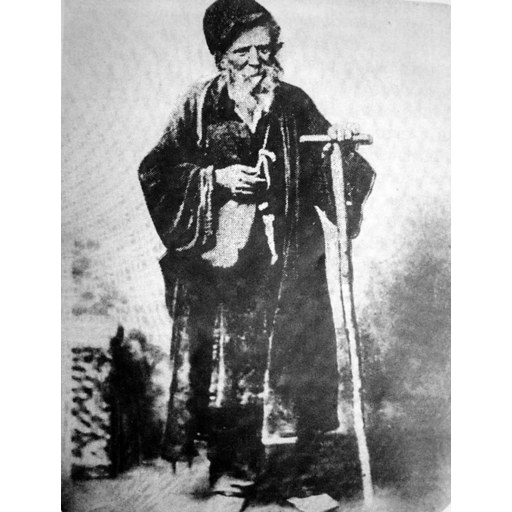
Unknown authorUnknown author
License: Public domain
Chirstophoros Papoulakos
Saint- Life Span
- 1780 - 1861 (age 81)
- Feast Day
- 18 January
- Gender
- male
- Church
- Eastern Orthodox
Places
Roles & Family
Biography
Christophoros Panagiotopoulos, known throughout the Peloponnese and later in Greek popular memory by the diminutive Papoulakos, was a monk and wandering preacher whose activity in the middle of the nineteenth century made him a central figure in the conflicts surrounding the organization of the Church in the newly independent Greek state. He was born in the village of Armpounas in Gortynia, Arcadia, in the central Peloponnese, during the last decades of Ottoman rule in the region. Contemporary records of his family, baptism, and youth are lacking; later accounts agree that he adopted the monastic life and that he was already of mature age when he became widely known as a preacher. He did not hold high ecclesiastical office and is not associated with a Western-style religious order, but with the ordinary monasticism of the Orthodox Church.
The political and ecclesiastical context of his public career was the Bavarian monarchy of King Otto and the unilateral declaration of autocephaly of the Church of Greece in 1833. That declaration, issued by a synod at Nafplio, separated the church of the kingdom from the Ecumenical Patriarchate of Constantinople and established a Holy Synod whose constitution owed much to Protestant German examples. For many monks, village clergy, and peasants, the new order appeared as a Westernizing break with Orthodoxy, compounded by the presence of Catholic and Protestant advisers around the court and by the dissolution or tight control of monasteries. Papoulakos gave voice to that discontent. In the late 1840s and with particular force in the years 1850 to 1852 he moved through Arcadia, Messenia, Elis, and other parts of the Morea, calling hearers to repentance, denouncing moral and canonical laxity, and urging fidelity to traditional rite and to the patriarchate. Reports from the period describe large rural gatherings and a climate of expectation that alarmed both the government and the official synod.
The authorities responded with police and military measures. Papoulakos was pursued in the mountains and arrested in 1852. He was investigated as a disturber of public order and as an opponent of the established church. After a period of detention he was transferred to the island of Andros and confined in connection with the Monastery of Panachrantos. He spent the remaining years of his life in that confinement and died there on 18 January 1861. He was buried on Andros. He had lived as a monk; there is no record of a marriage or of children.
Papoulakos was not canonized by the Church of Greece, nor does the Orthodox Church have a process of beatification analogous to that of the Latin Church. In later popular piety, especially in traditionalist and Old Calendarist circles, he came to be remembered as a confessor who had suffered for the ancestral faith, and 18 January was observed by some as the anniversary of his repose. Modern historical writing treats him as a significant witness to nineteenth-century Greek popular Orthodoxy, to millenarian and anti-Western currents, and to the social tensions produced by the Bavarian-sponsored modernization of church and state. Scholars also emphasize the limits of the evidence: his early biography is poorly documented, and hagiographic stories of prophecy and wonder-working that circulated after his death cannot be verified from contemporary official sources.