Church of God is a saint of the Catholic Church.
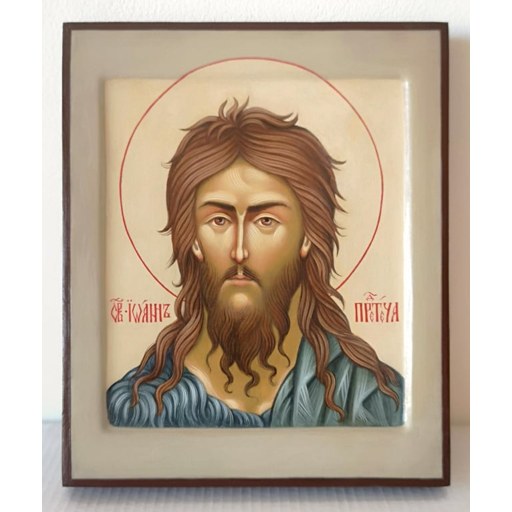
https://www.reddit.com/r/OrthodoxChristianity/comments/1g99g3d/icon_of_saint_john_the_forerunner_and_baptist_i/
License: unknown
Church of God
Saint- Church
- Catholic
Roles & Family
Biography
The designation Church of God does not refer to a single historical person, saint, or hierarch, but to a family of Protestant Christian bodies, most of them rooted in the American Holiness and Pentecostal movements of the late nineteenth and early twentieth centuries. Because the subject is an ecclesial name rather than an individual, there is no verified year of birth or death, no city of birth or burial, and no personal canonization or feast day. Several independent denominations and fellowships have used the same biblical phrase, drawn from New Testament language about the church of God, to claim identity with apostolic Christianity rather than with a later denominational label.
The body most often meant in North American Pentecostal contexts is the Church of God with international offices in Cleveland, Tennessee. Its origins are usually dated to 1886, when Richard G. Spurling and a small group in Monroe County, Tennessee, and adjacent North Carolina formed a fellowship sometimes called the Christian Union, seeking to restore New Testament church order and holiness of life. A revival associated with the Shearer Schoolhouse in the 1890s brought reports of speaking in tongues. Ambrose Jessup Tomlinson became the dominant organizer after the first years of the twentieth century; under his leadership the group adopted the name Church of God and developed a centralized government with a general overseer. A major division in 1923 separated Tomlinson from the Cleveland organization. The continuing Cleveland body became a large classical Pentecostal denomination, while Tomlinson’s following developed into what is now commonly known as the Church of God of Prophecy.
A distinct Holiness body, the Church of God with later headquarters in Anderson, Indiana, grew from the work of Daniel Sidney Warner and associates in the 1880s. This reformation movement rejected sectarian names and creeds in favor of the unity of all regenerated believers, emphasized entire sanctification, practiced believer’s baptism by immersion, and historically remained non-Pentecostal in the tongues-centered sense. Yet another major African American Pentecostal church, the Church of God in Christ, was organized under Charles Harrison Mason in the early twentieth century after the Azusa Street revival; it is legally and historically separate from both the Cleveland and Anderson bodies, though it shares similar restorationist language.
Other groups, including the earlier Churches of God associated with John Winebrenner in Pennsylvania and various independent Holiness fellowships, have used the same name. None of these bodies is headed by the Bishop of Rome or by an Eastern or Oriental Orthodox patriarch, and they do not maintain a Catholic or Orthodox calendar of canonized saints. Polities range from relatively congregational to strongly episcopal-Pentecostal. Global missions in the twentieth century spread Cleveland- and Anderson-related churches to Latin America, the Caribbean, Africa, and Asia. Precise membership figures and local founding dates vary by branch and should not be collapsed into a single biography.
Taken together, the Churches of God illustrate American restorationism: a claim to recover New Testament Christianity, often combined with Holiness ethics and, in several branches, Pentecostal gifts. Historians treat them as multiple organizations, not as one person or one undivided church. Where sources disagree on early minutes, names of local unions, or the exact year a particular assembly took the name Church of God, those details remain uncertain and are omitted here rather than guessed.