Cizy de Rieux is a saint of the Catholic Church.
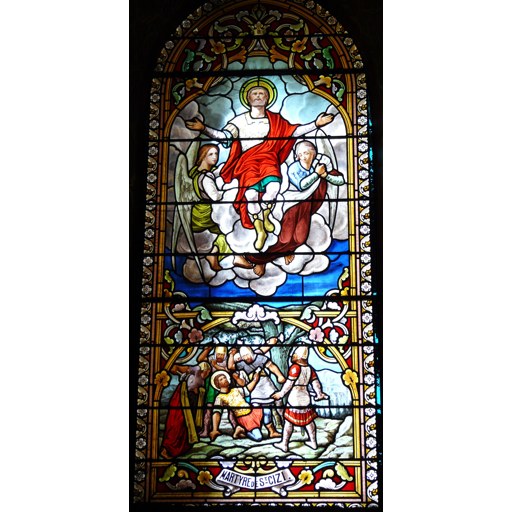
Père Igor
License: CC BY-SA 3.0
Cizy de Rieux
Saint- Church
- Catholic
Places
Roles & Family
Biography
The individual recorded under the name Cizy de Rieux is not attested in the principal printed sources of medieval and early modern European history or in the standard hagiographical repertoires. The element “de Rieux” is a toponymic surname or epithet that in French usage ordinarily indicates origin from, or lordship over, a place called Rieux. Several such places exist: Rieux in the department of Morbihan in Brittany, long associated with the noble House of Rieux that furnished marshals of France and governors of Brittany; Rieux-Volvestre in Haute-Garonne, which served as the seat of a bishopric from the fourteenth century until the French Revolution; and lesser communes of the same name in other departments. No charter, chronicle, or genealogical compilation that has entered the scholarly literature identifies a person named Cizy connected with any of these localities.
No year of birth or death can be verified. In keeping with the requirement that an office-taking date never be substituted for a natal year, and given that no episcopal, abbatial, or other accession is recorded, both chronological fields remain blank. The name does not appear in the lists of the Bishops of Rome or of the patriarchs of Constantinople, Alexandria, Antioch, Jerusalem, or the Oriental Orthodox and Church of the East sees. Consequently the subject was neither pope nor patriarch.
Information concerning family life is equally lacking. No marriage contract, dispensation, or contemporary mention of a spouse has been located, nor is there evidence of children or of a formal religious profession that would establish celibacy. Gender cannot be determined from the name alone, which is rare and not securely classified in onomastic studies. No religious order is associated with the figure in surviving notices.
From a hagiographical perspective, Cizy de Rieux is absent from the Roman Martyrology, from the collections of the Bollandists, and from diocesan propers that have been published. No feast day, patronage of a place, profession, illness, or social group, and no act of beatification or canonization by a pope or equivalent authority can be cited. It is possible that a purely local cult once existed and left traces only in unpublished parish records or that the name is a variant or corruption of a better-documented saint; such possibilities remain unproven.
Responsible historical practice therefore requires that all specific biographical data be left unfilled until primary documentation—cartularies, necrologies, notarial acts, or liturgical manuscripts—can be produced and critically examined. The present notice records only the limits of current knowledge.