Claudius of Teramo is a saint of the Catholic Church.
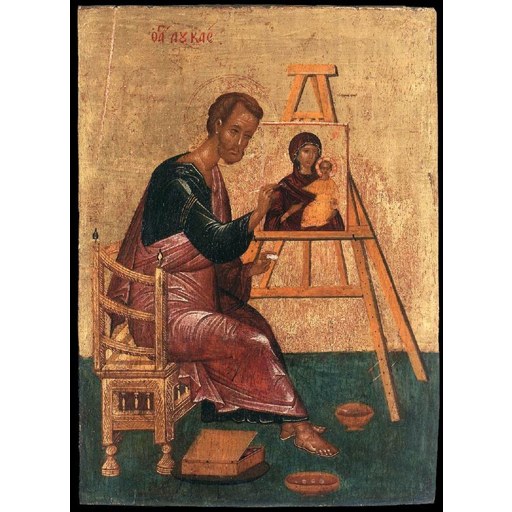
https://www.dailyartmagazine.com/saint-luke-the-ultimate-holy-painter/
License: unknown
Claudius of Teramo
Saint- Gender
- male
- Church
- Catholic
Roles & Family
Biography
Claudius of Teramo is an obscure figure associated with the city of Teramo in the Abruzzo region of central Italy. Standard hagiographical collections, episcopal catalogues of the diocese of Teramo, and the Roman Martyrology do not furnish a reliable vita, a verified century of activity, or an attested cult with a universally observed feast. Teramo, known in antiquity as Interamnia Praetutiorum, developed as an ecclesiastical centre in late antiquity and the early Middle Ages; its better-documented holy figures, above all Saint Berardo in the twelfth century, dominate local memory. The Latin personal name Claudius was common in late Roman and early medieval Italy, so a local cleric, monk, or holy man of that name could in principle have been remembered, yet no contemporary or near-contemporary source confirming his existence, office, or manner of death has been identified in widely available historical literature.
Because the documentary trail is so thin, it is not possible to state whether Claudius was a bishop of the see, a member of a religious community, a martyr, or a lay ascetic, nor to assign him to a particular century without speculation. He cannot be securely identified with better-known saints of the same name, such as the Roman martyr Claudius or Claudius of Besançon, and no evidence links him to the later medieval orders active in Abruzzo. Claims of patronage, formal canonization, or beatification likewise lack support in the major ecclesiastical records. Local Italian hagiography frequently preserves names that originated in oral tradition, later medieval compilations, or civic pride and that cannot be corroborated from independent sources; Claudius of Teramo appears to belong to that category.
The broader religious history of Teramo supplies context but not biography. The city and its diocese experienced invasions, reconstructions, and the gradual accumulation of relics and local cults around the cathedral and other churches. Devotion to early Christian or early medieval figures was often highly localized and poorly recorded outside the immediate region. Without critically edited necrologies, early episcopal lists from the diocesan archives, or mentions in papal correspondence, further details of birth, death, burial, family, or religious profession remain beyond verification. Historians must therefore treat the name as a possible local memory rather than as a fully recoverable historical personality.
This paucity of evidence is itself instructive for the study of Italian local sanctity. Many Abruzzese and central-Italian cults rest on late or fragmentary notices; rigorous method requires that precise dates, places of origin, and offices not be supplied by conjecture. Until unpublished archival material from Teramo-Atri or specialized local historiography yields primary testimony that can be evaluated, Claudius of Teramo stands as a name attached to a place, not as a figure whose life can be narrated with confidence.