Clemens August von Galen is a blessed of the Catholic Church (1878 - 1946). Clemens August von Galen's feast day is celebrated on 22 March.
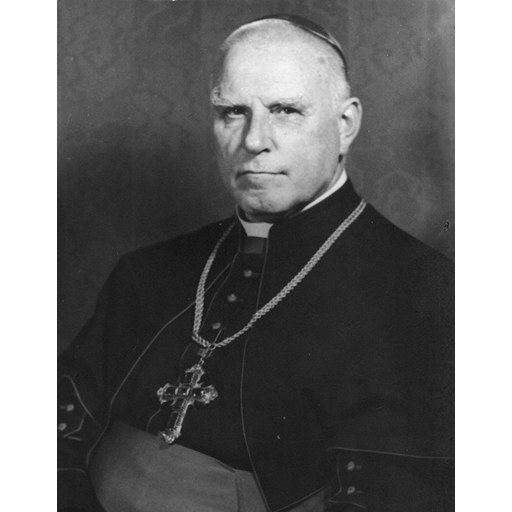
Domkapitular Gustav Albers († 1957)
License: CC BY 2.5
Clemens August von Galen
Blessed- Life Span
- 1878 - 1946 (age 68)
- Feast Day
- 22 March
- Gender
- male
- Church
- Catholic
Places
Relics & Where to Venerate
Location unknown
The bodily remains of Clemens August von Galen are a first-class relic. Venerated at St.-Paulus-Dom.
Location unknown
Galen feared that German Catholics were being relegated to second-class status in Hitler's Germany and believed Hitler was missing the point that the Catholic Church and the state could be aligned against Bolshevism
Roles & Family
Canonization
Biography
Clemens August Graf von Galen was born on 16 March 1878 at Burg Dinklage in the Grand Duchy of Oldenburg, into a prominent Westphalian Catholic noble family. He was one of thirteen children of Count Ferdinand Heribert von Galen, a Centre Party politician who sat in the Prussian House of Representatives, and Countess Elisabeth von Spee. Raised in a household that combined aristocratic tradition with strict Catholic piety, he received early schooling at home and later attended Jesuit colleges, including Stella Matutina in Feldkirch, before completing gymnasium studies in Vechta. He studied philosophy, history, and theology at Freiburg, Innsbruck, and Münster, and was ordained a priest of the Diocese of Münster in 1904. He belonged to the secular (diocesan) clergy rather than to a religious order.
After brief service as a chaplain in Münster he was sent to Berlin, where he spent more than twenty years in parish work, including a long tenure at St. Matthias in Schöneberg. In the imperial and Weimar capital he became known as a conservative pastor, a critic of socialism and of what he regarded as moral decay in urban life, and a monarchist who remained attached to the old order. In 1929 he returned to Westphalia as parish priest of St. Lambert’s in Münster. In 1933 Pope Pius XI named him Bishop of Münster; he was consecrated the same year, shortly after the Nazi seizure of power. Like other German bishops he initially hoped that the Reichskonkordat of 1933 might secure the Church’s legal position, but he soon became one of the regime’s most outspoken Catholic critics.
Von Galen’s national and international reputation rests above all on three sermons preached in Münster in July and August 1941. In them he denounced the Gestapo’s seizures of religious houses, the regime’s campaign against the Church, and—most famously—the secret euthanasia programme that killed disabled and mentally ill people. Copies of the sermons circulated widely despite censorship, and he was nicknamed the “Lion of Münster.” The Nazi leadership considered arresting or executing him but held back, fearing unrest in Catholic Münsterland. He also condemned racial ideology and the persecution of Jews in pastoral letters and sermons, though his most public and sustained protests concerned euthanasia and the rights of the Church rather than a systematic public campaign against the Holocaust. After Germany’s defeat he criticized aspects of Allied occupation policy, including the treatment of German civilians and what he judged to be collective or arbitrary features of denazification.
In February 1946 Pope Pius XII created him a cardinal. He travelled to Rome for the consistory and received the red hat, but on his return to Münster he fell ill. He died on 22 March 1946 of peritonitis following an appendectomy, only weeks after becoming a cardinal, and was buried in Münster Cathedral. A cause for beatification was opened in the 1950s; Pope Benedict XVI beatified him in St. Peter’s Square on 9 October 2005. His liturgical commemoration is kept on 22 March. He has not been canonized.