Clement of Ohrid is a saint of the Catholic Church (d. 916). Clement of Ohrid's feast day is celebrated on 27 July; 25 November. Clement of Ohrid is the patron saint of Ohrid;Bulgaria;North Macedonia;education.
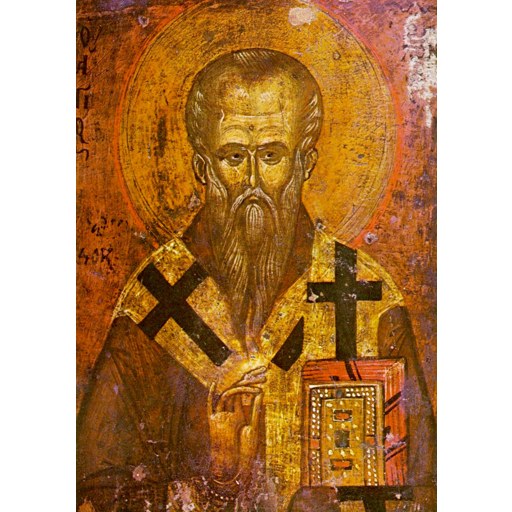
Unknown authorUnknown author
License: Public domain
Clement of Ohrid
Saint- Life Span
- d. 916
- Feast Day
- 27 July; 25 November
- Gender
- male
- Church
- Catholic
Places
Roles & Family
Patronage
Ohrid;Bulgaria;North Macedonia;education
Biography
Clement of Ohrid was a medieval Slavic cleric, teacher, and writer, counted among the principal disciples of Saints Cyril and Methodius. Neither the year nor the place of his birth is recorded in contemporary documents. The chief narrative source for his life is a Greek hagiography composed by Theophylact, Archbishop of Ohrid, around the turn of the twelfth century. That text presents Clement as belonging to the Slavic-speaking circle formed by Cyril and Methodius and as a participant in their mission to Great Moravia in the second half of the ninth century. There he worked to establish Christian worship and letters in the Slavic vernacular, using the Glagolitic script associated with Cyril. After Methodius died in 885, political and Latin ecclesiastical opposition in Great Moravia led to the expulsion of the Slavic clergy. Clement, together with Naum, Angelar, and other companions, reached the First Bulgarian Empire, whose ruler Boris I had accepted Christianity in the 860s and was seeking a clergy able to teach and celebrate the liturgy in Slavic.
Boris assigned Clement to the southwestern district known as Kutmichevitsa, which included the areas of Ohrid, Devol, and Glavinitsa in what is now North Macedonia and Albania. In that region Clement organized a large teaching enterprise, later called the Ohrid Literary School. Medieval tradition states that he trained some 3,500 students, thereby forming a native Slavic clergy. He is closely linked with the spread of Slavic literacy and with the script that came to be called Cyrillic, although scholars continue to debate how far the invention or early development of Cyrillic should be attributed to him personally rather than to the contemporary school at Preslav. He composed homilies, hymns, and hagiographical writings in Old Church Slavonic and is credited with adapting liturgical texts for Slavic use.
In 893, after Symeon succeeded Boris and a council at Preslav confirmed Slavic as the language of the Bulgarian church, Clement was consecrated bishop of Dremvica, also called Velika, becoming one of the first bishops of Slavic speech in the Bulgarian church. He remained based in the Ohrid region, where he founded the Monastery of Saint Panteleimon. Combining episcopal duties with teaching and writing, he was a central figure in the Christian and literary culture of the western Bulgarian lands until the end of his life. Medieval sources do not record a wife or children; he lived as a monk and bishop and never held the office of patriarch or of bishop of Rome.
Clement died in Ohrid on 27 July 916 and was buried in the monastery he had established. His tomb became a place of veneration; the later church at Plaošnik in Ohrid is associated with his cult and relics. He is commemorated on 27 July and, together with Cyril, Methodius, Naum, Gorazd, Sava, and Angelar, on 25 November as one of the Seven Apostles of Bulgaria. Both the Bulgarian Orthodox Church and the Macedonian Orthodox Church honor him as a major saint. He is regarded as a patron of Ohrid and is widely associated with education and Slavic letters; Sofia University bears his name. Modern national historiographies have sometimes disputed his ethnic identity, but the early evidence presents him as a leading organizer of Slavic Christian culture within the First Bulgarian Empire.