Columba de Roma is a saint of the Catholic Church.
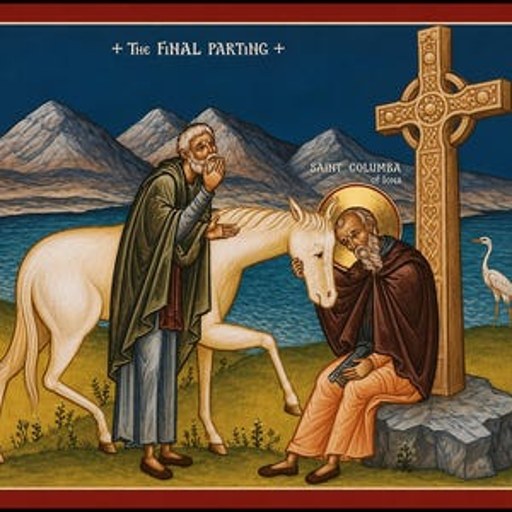
https://etsy.com/market/st_columba_iona_icon
License: unknown
Columba de Roma
Saint- Church
- Catholic
Places
Roles & Family
Biography
Columba de Roma is a Christian holy figure whose historical identity cannot be established from surviving reliable sources. The name Columba, meaning dove in Latin, was borne by several saints of late antiquity and the early Middle Ages. The best-documented are the Irish abbot and missionary Columba of Iona in the sixth century and the virgin martyr Columba of Sens, whose legend is set in third-century Gaul. A nun named Columba was also among the ninth-century Martyrs of Córdoba. None of these lives is primarily associated with the city of Rome as the theatre of the saint’s activity or death.
No contemporary or early medieval text that can be securely identified as a life of a distinct Columba of Rome has been preserved. The principal martyrologies of the Latin Church, including the Hieronymian Martyrology and the later Roman Martyrology, do not contain an unambiguous entry for a saint of this name whose career unfolded in Rome. Later mentions of relics, church dedications, or local commemorations in or near Rome may result from the translation of relics belonging to another Columba, from the common medieval habit of assigning a well-known name to an anonymous tomb, or from simple confusion among homonymous saints.
Essential facts of biography are therefore lacking. The year of birth, the year of death, the place of origin, the manner of death, and the religious status of any person who might stand behind the designation Columba de Roma remain unknown. It is not even possible to determine with certainty whether the figure was male or female, a martyr or a confessor, a monastic or a lay person. Assertions found in late pious literature or in unsourced modern compilations cannot be corroborated against independent historical evidence and are omitted here.
The cult of saints named Columba spread widely through the Latin West, and Rome as the centre of Western Christendom naturally became a destination for relic translations and a place of secondary dedications. Any veneration attached to the name Columba in Rome should be interpreted within that broader pattern of early medieval saint cult rather than as evidence for a well-documented Roman biography. In the present state of the evidence, Columba de Roma must be treated as an obscure designation rather than as a historical individual whose life can be narrated in detail.